

Honouring the past, amplifying the future—BAZAAR Women of the Year 2026 celebrates the women whose music moves more than just a room. For Volume 1, we turn our spotlight to the new generation—the bold, the boundary-breaking and the ones writing the next verse. Meet Alena Murang.
Born in Sarawak, Alena Murang is considered one of the most prominent female voices—a musician who has mastered the art of sape’ playing since childhood. Often deliberate in her choices, Alena is constantly opting for what genuinely reflects her sense of self, embodying a balance of authenticity, modernity and cultural identity outwardly. For years, the sape’ was deemed an instrument belonging solely to men—a boundary drawn in tradition and held firm by convention. But, it was precisely that resistance that ignited something unstoppable in the next generation and herself.
Alena started learning the sape’ at the age of 10, when she and her cousins were still dancing instinctively to every flick and strum of the instrument. But, proximity often has a way of cultivating a deepened resonance and a calling. Despite the social stigma, Alena wanted to learn, preserve and in a way spread the classics of Borneon culture—safeguarding traditions through artistry. So, learning the instrument became a goal. Then, without quite realising it, Alena and her cousins created a historical act, becoming the first women to ever draw music from the sape’. “It was the foresight of our mothers and our teacher, uncle Mathew, who broke the barriers, and they protected us from certain comments from the community when we first started learning,” she explained.
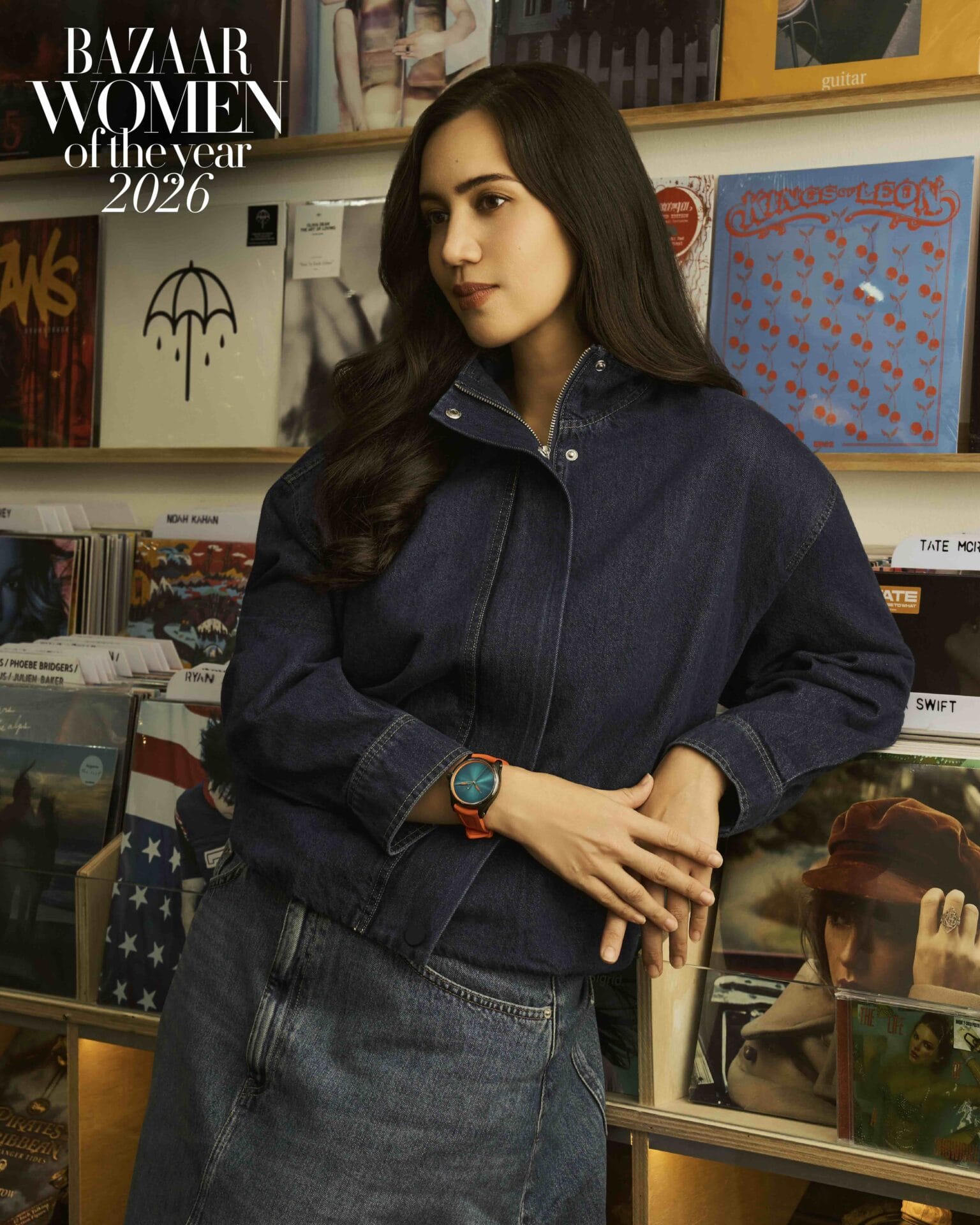
Alena Murang is wearing an H. Moser & Cie. Pioneer Centre Seconds Spiced Aqua watch from Cortina Watch.
“In my early 20s, I felt the heaviness of shouldering such a responsibility—I think that’s what really motivated me at the time, some sense of urgency and working towards something that’s bigger than myself.” Having reshaped the cultural landscape entirely, sapé has transcended its origins—now embraced and embodied by people of every gender, generation, and background. “I do feel a sense of calm every time I hear it. It truly has given a life that was beyond my dreams,” she said. “It became a way to open conversations about Borneo culture and environment.”
A name to be reckoned with, she draws inspiration consistently from her heritage, and from her own experiences—committed to creating music that echoes shared sentiments, addresses wide swatches of society and culture, and remains engraved in people’s memory. “My parents were very intentional in immersing us in cultural heritage,” she said. And, it was a life she would not trade for anything. “Sometimes we would climb mountains to stay in villages over Gawai, and observe the ceremonies. Other times, they would take me out of school to participate as a weaver.” The constant movement taught her the formidable wealth of art and music that is deeply rooted in a community’s identity and in how they see the world. She carried all of it with her, and eventually, into her music.
“My generation is in a position where we can still learn and revive our heritage from our grandparents, and so part of this journey is one of urgency, and I’ve always hoped to inspire others to learn their heritage too,” she said. And perhaps that is Alena’s greatest offering—not just the music itself, but the reminder of what music carries for people.The stories threaded through every note. The histories that refuse to be silenced. “It’s no accident that humankind was created in different places, with different languages, songs, and ways of living. We’re not meant to live in a monocultural bubble.” She added: “The world is truly a better place when we understand each other’s culture and heritage, and I believe that it can be a path to peace.”
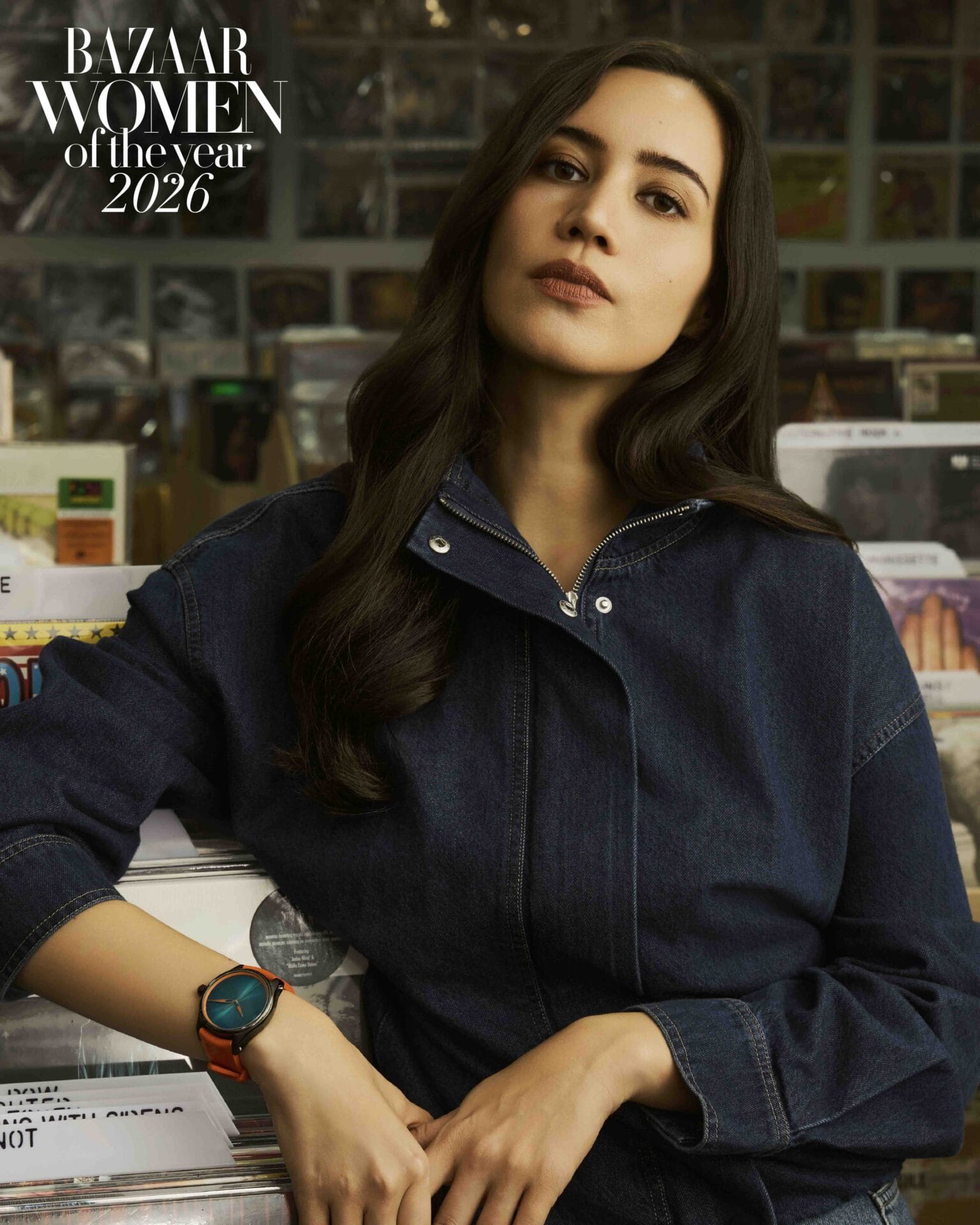
Alena Murang is wearing an H. Moser & Cie. Pioneer Centre Seconds Spiced Aqua watch from Cortina Watch.
When asked how she decides what to preserve exactly as it was, and what to reinterpret in a modern way, she responded: “Like in most arts, we’re always encouraged to learn the classical and then later on create new works. My approach to preserving songs is to learn how a song was sung at a particular point in time, record it and archive it, and if I feel inspired to create something new, then I do.” Yet this is far from a modern revelation—she traces the practice back to her elders, who instinctively reshaped songs, breathing new life into lyrics to reflect the spirit of their time. “I believe that’s the key to keeping heritage alive and thriving.”
Since then, the accolades have come—but so has a hard-won clarity. “I used to believe that having a full calendar was part of success. Now, being rested and healthy whilst working on fulfilling projects, is the winning combo.” Among her most treasured memories, she recounts performing with the Malaysian Philharmonic Orchestra as nothing short of magical—a highlight matched by her appearance at Colours of Ostrava, a festival in the Czech Republic. It was there that the full weight of her journey truly settled in. “Seeing people from such a different culture connect with sape’ music was extraordinary in itself—but we were also sharing a backstage with Florence & the Machine, The Cure, Rosalía, and Calypso Rose. In that moment, I thought ‘wow’—how did songs from our small villages, in the middle of the jungle, find their way here?”
But the work, as ever, continues, and Alena is nowhere near done writing her story—the best is very much still to come. As for what the future holds, she says: “New music—I’ve been working on songwriting in two genres that I really love: rock and meditative music. Most of the songs are inspired by folklore from our Kelabit traditions and also from Sarawak.” She added: “Making the work already takes courage, putting it out there, and having given it your all—that always deserves being celebrated.”
View this post on Instagram
In a world that moves fast and forgets faster, Alena Murang is a quiet but formidable act of resistance. She carries her culture not as a burden, but as a gift—one she offers generously through every performance, every archived melody, every boundary she has dismantled simply by picking up the sape’. With new music on the horizon and a spirit that refuses stillness, she leaves us with perhaps the most enduring truth of her journey: that heritage, like music, was never meant to be frozen in time. It was always meant to traverse.
Stay tuned for BAZAAR Women of the Year 2026 Volume 2, coming out in October 2026. Find us on Instagram, TikTok, and Facebook at @harpersbazaarmy for more WOTY 2026 coverage.
Credits
Photographer: Edmund Lee
Videographer: Syafiq Sazaly, Zakwan Taufiq
Art Direction: Khairani Ramli
Lifestyle Director: Syameen Salehaldin
Digital Director: Amalina Anuar
Assistant: Syazrel Boharin
Hair: Philex Chin
Makeup: Kevin Lee
Outfits: Top: Urban Revivo, Skirt: Zalora
Location: Vinyl Vox