

From Marilyn Monroe and Cher to Beyoncé and Ariana Grande, this is the story of how one Austrian craftsman’s vision illuminated a century of stardom.
Images: Swarovski. Additional photos: Abdul Aziz Draim.
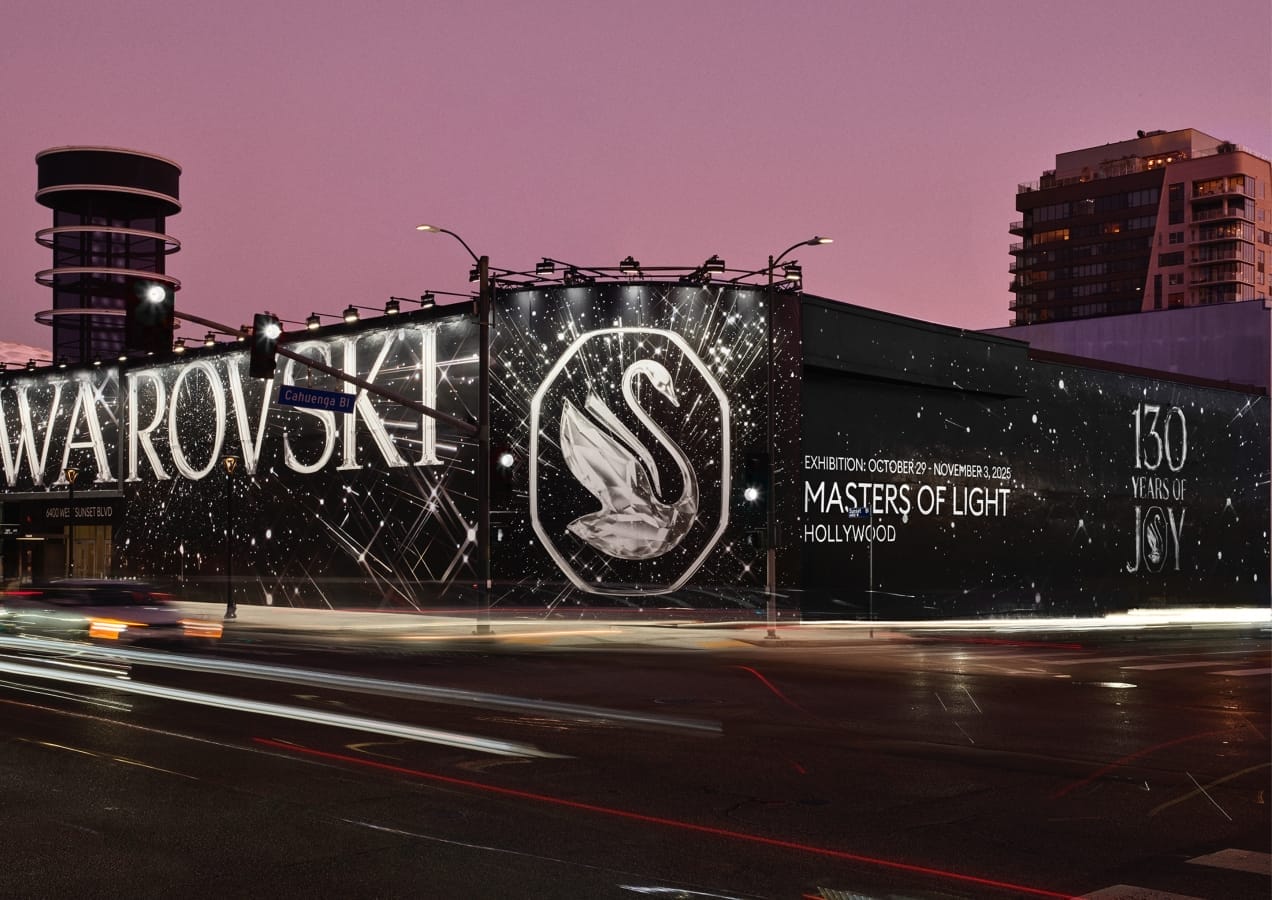
The Swarovski ‘Masters of Light – Hollywood’ exhibition at 6400 West Sunset Boulevard
When Daniel Swarovski patented his electric cutting machine in 1891, he couldn’t have foreseen that his precision-cut crystals would one day dress Marilyn Monroe for her most iconic moment, or that they’d transform Katy Perry into a human chandelier on the Met Gala steps. Yet here we are, standing in the heart of Tinseltown at ‘Masters of Light – Hollywood’, an exhibition that proves Swarovski’s influence on fashion and film has been nothing short of extraordinary.

CEO Alexis Nasard and global creative director Giovanna Engelbert welcomed a sparkling roster of stars and icons to the exhibition—curated by Alexander Fury—that traces Swarovski’s enduring relationship with film, fashion, and popular culture through archival pieces that speak to the house’s technical mastery. The location is deliberate. Los Angeles isn’t merely hosting this celebration of 130 years of crystalline excellence—it’s the city where Swarovski’s creations first caught the silver screen spotlight. In 1932, Marlene Dietrich wore thousands of Swarovski stones in Blonde Venus, each one capturing light with unprecedented brilliance. That partnership between Austrian precision and Hollywood glamour has endured through nine decades, making this exhibition feel less like a retrospective and more like a homecoming.
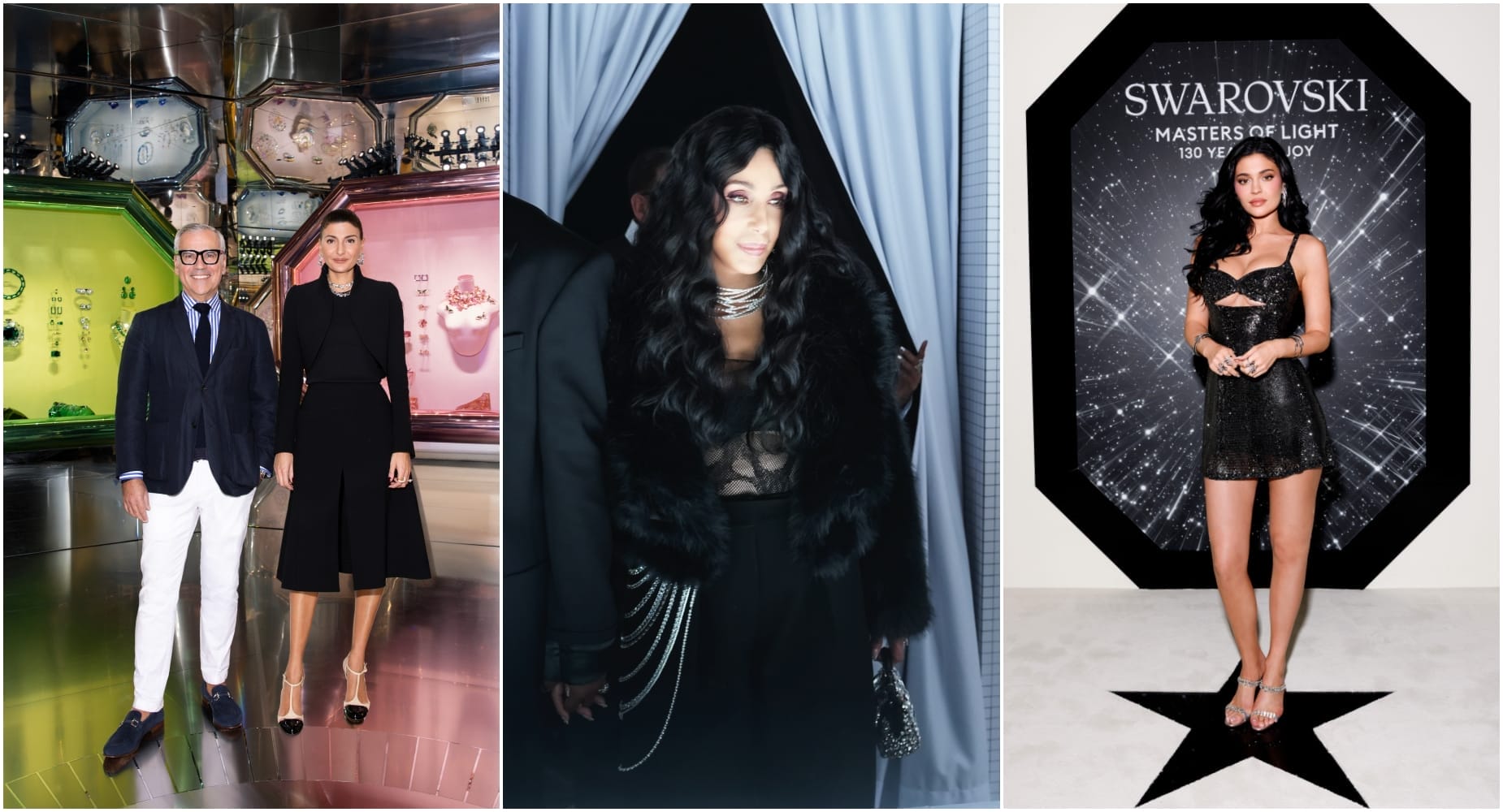
From left: Swarovski CEO Alexis Nasard and global creative director Giovanna Engelbert; the legendary Cher; and Kylie Jenner.
What becomes immediately apparent upon entering the exhibition hall at 6400 West Sunset Boulevard is that this isn’t your typical heritage brand exhibition. Rather than resting on its considerable laurels, Swarovski has curated an experience that balances archival reverence with contemporary relevance.
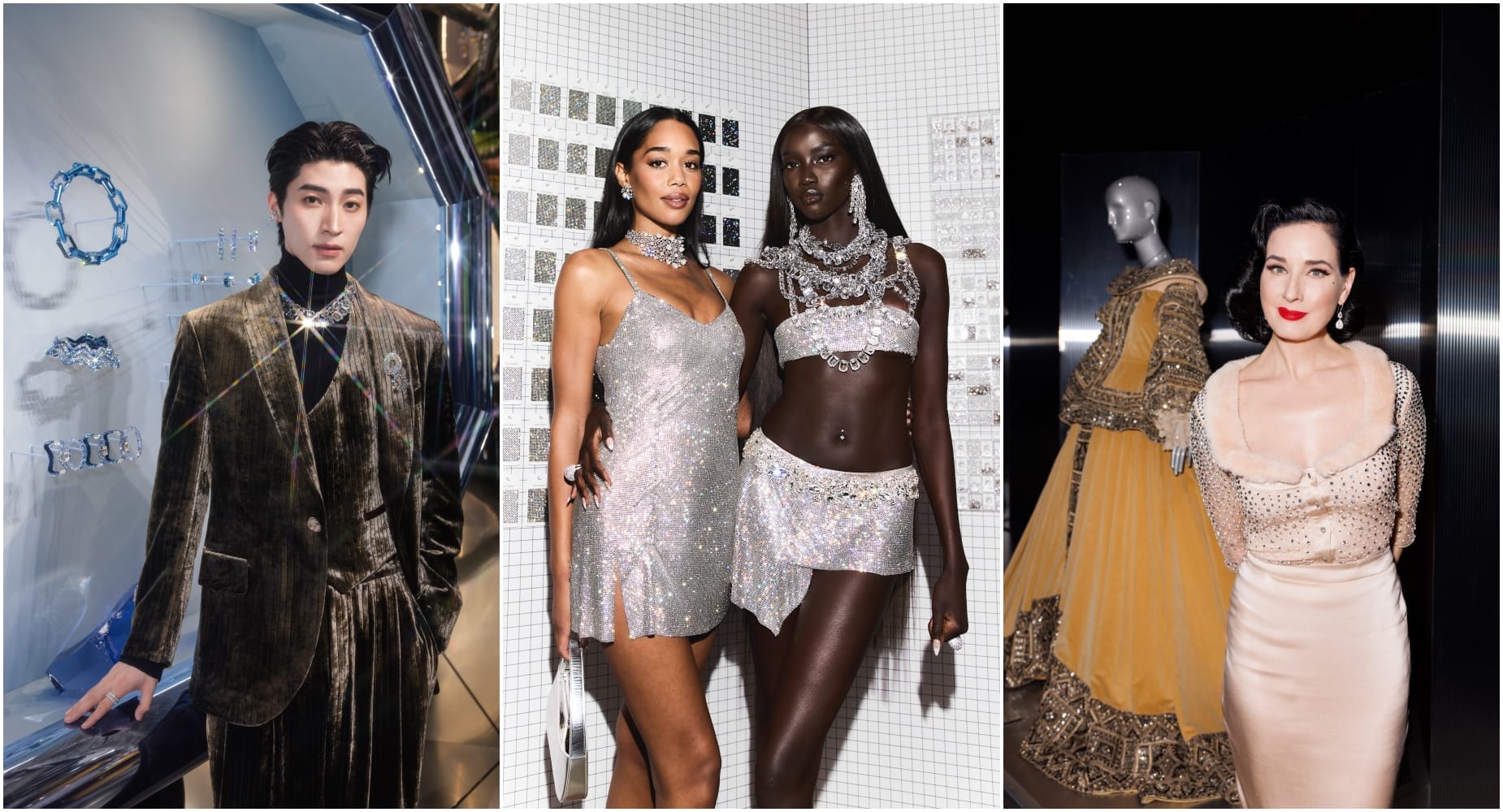
From left: Thai star Blue Pongtiwat; Laura Harrier & Anok Yai; Dita Von Teese.
The journey begins
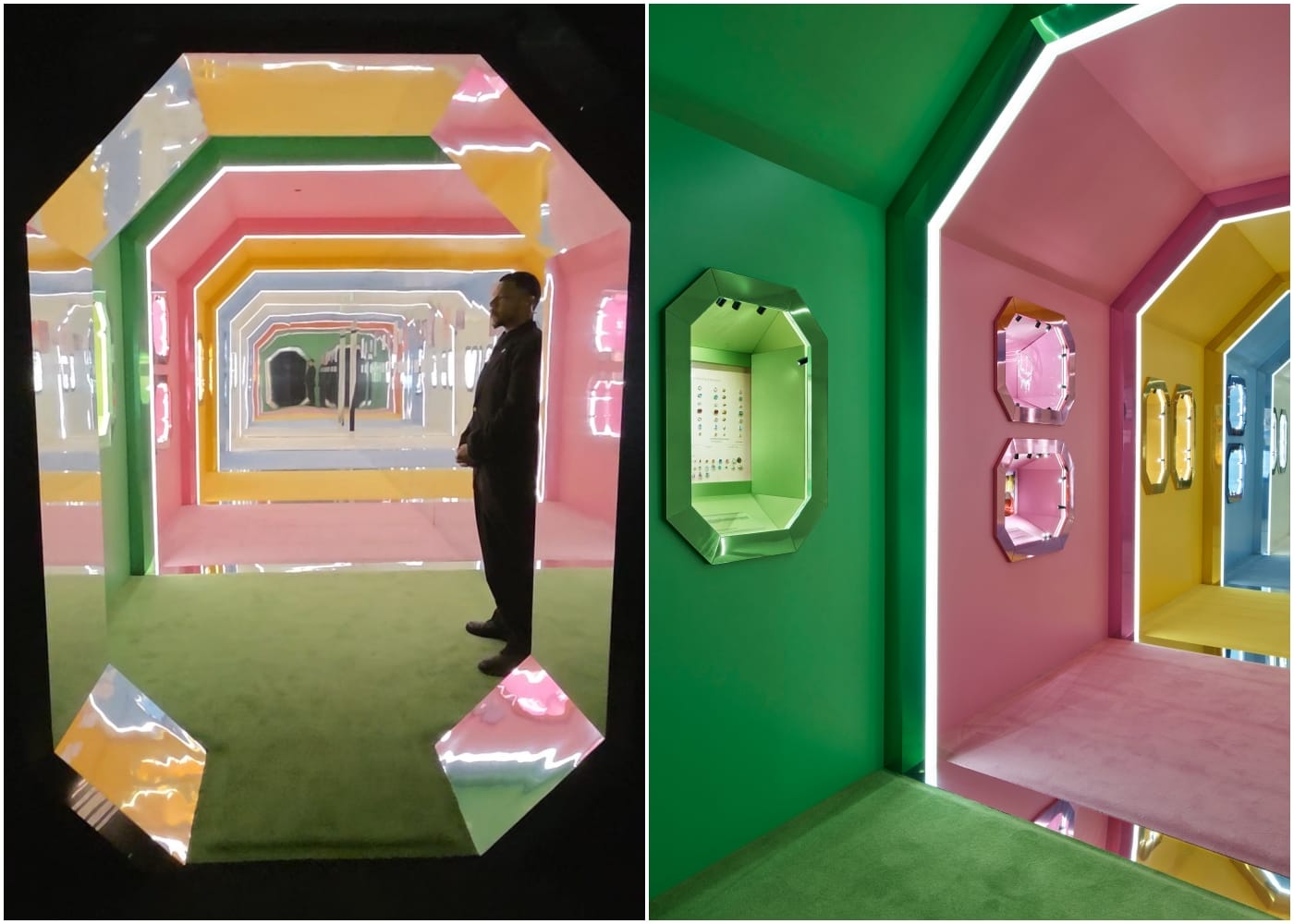
The Time Chamber
The Time Chamber, a tunnel dressed in the hues of the Maison’s signature packaging, traces the house’s evolution from Daniel Swarovski’s Bohemian roots to the brand’s current lab-grown diamonds, whilst vitrines alongside one wall display some of Hollywood’s greatest cinematic gems, where Dorothy’s ruby slippers and the glass slippers from Disney’s live-action Cinderella share space with Glinda the Good Witch’s crown, as worn by Ariana Grande in Wicked. All resplendent in Swarovski crystals.
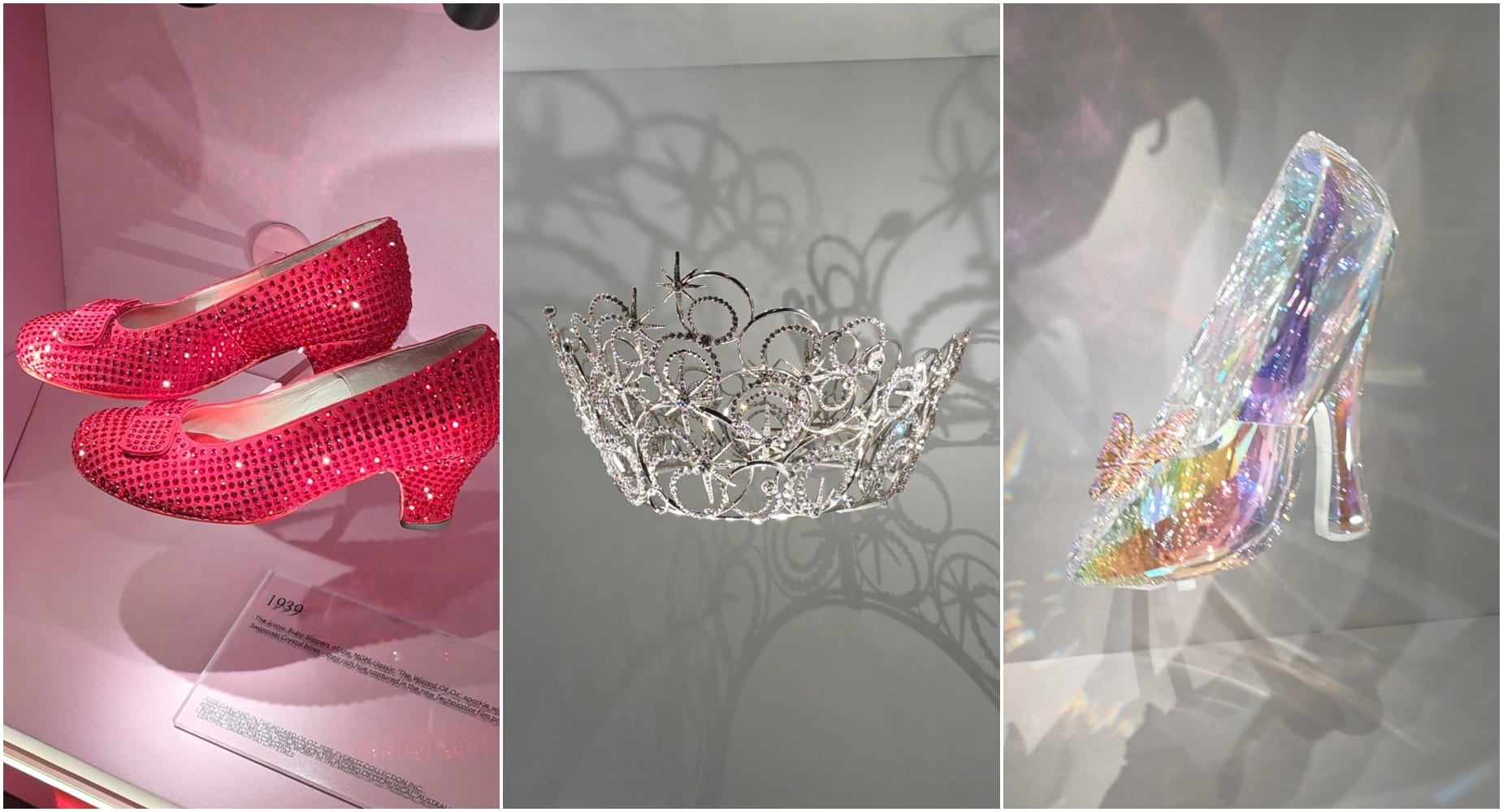
From left: Dorothy’s ruby slippers; Glinda the Good Witch’s crown from Wicked; Cinderella’s glass slippers.
Next, we then enter Silver Screen Style, a hall that perhaps offers the exhibition’s most compelling visual dialogues. Here, film costumes converse directly with haute couture pieces, many displayed together for the first time. Gilbert Adrian’s 1933 design for Greta Garbo in Queen Christina—all velvet, bullion thread and strategically-placed crystals—sits opposite John Galliano’s equally theatrical interpretation for Christian Dior’s 2007 Haute Couture collection. The exchange of inspiration becomes tangible: fashion borrowing from film borrowing from fashion, with Swarovski crystals as the common language.
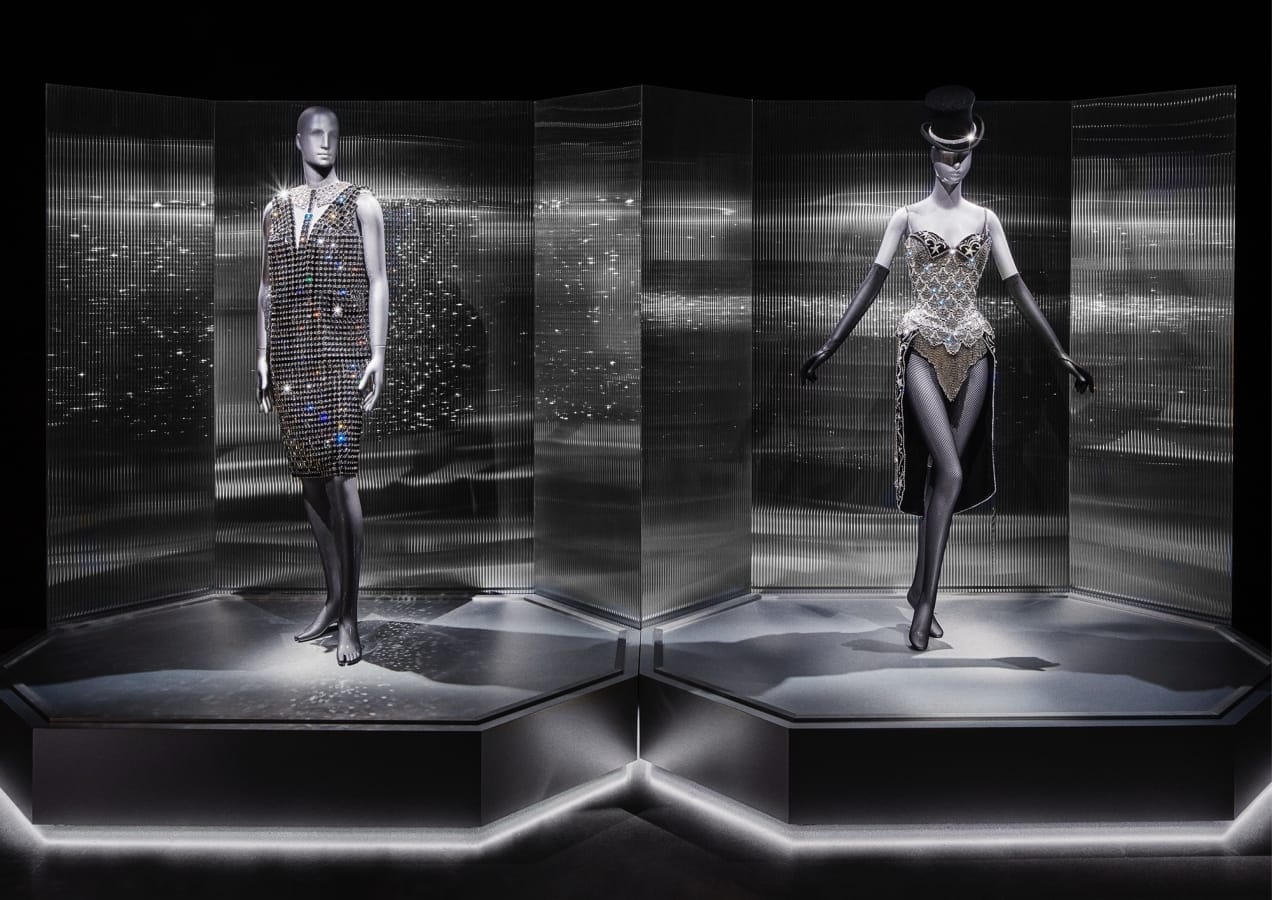
From left:Dress from Thom Browne A/W ’05; and Satine costume worn by Nicole Kidman in Moulin Rouge.
Elsewhere, Sandy Powell’s Oscar-winning costumes from Shakespeare in Love find their contemporary echo in Christian Lacroix’s 2002 bridal gown, famously worn by Madonna. Marc Jacobs’s 2024 homage to Travis Banton’s ‘Fabergé’ dress from 1937’s Angel demonstrates how certain designs achieve immortality, their influence rippling forward through decades.

From left: Christian Lacroix 2002 couture gown worn by Madonna; Sandy Oowell’s costume for Dame Judi Dench in Shakespeare in Love.
The showstopper dress
But oh, then there is the most infamous dress of them all: the Marilyn Monroe dress. The Hollywood Idol chamber spotlights the sheer, flesh-toned gown the blonde bombshell wore to sing ‘Happy Birthday’ to President Kennedy in 1962. Still shimmering with over 2,500 Swarovski crystals, the dress was dyed to match Monroe’s skin—and she was sewn into it for that singular performance. Standing before it, one understands immediately how crystal functions as more than embellishment—it’s transformative. Monroe didn’t simply wear sparkles; the crystals allowed her to literally embody stardom.
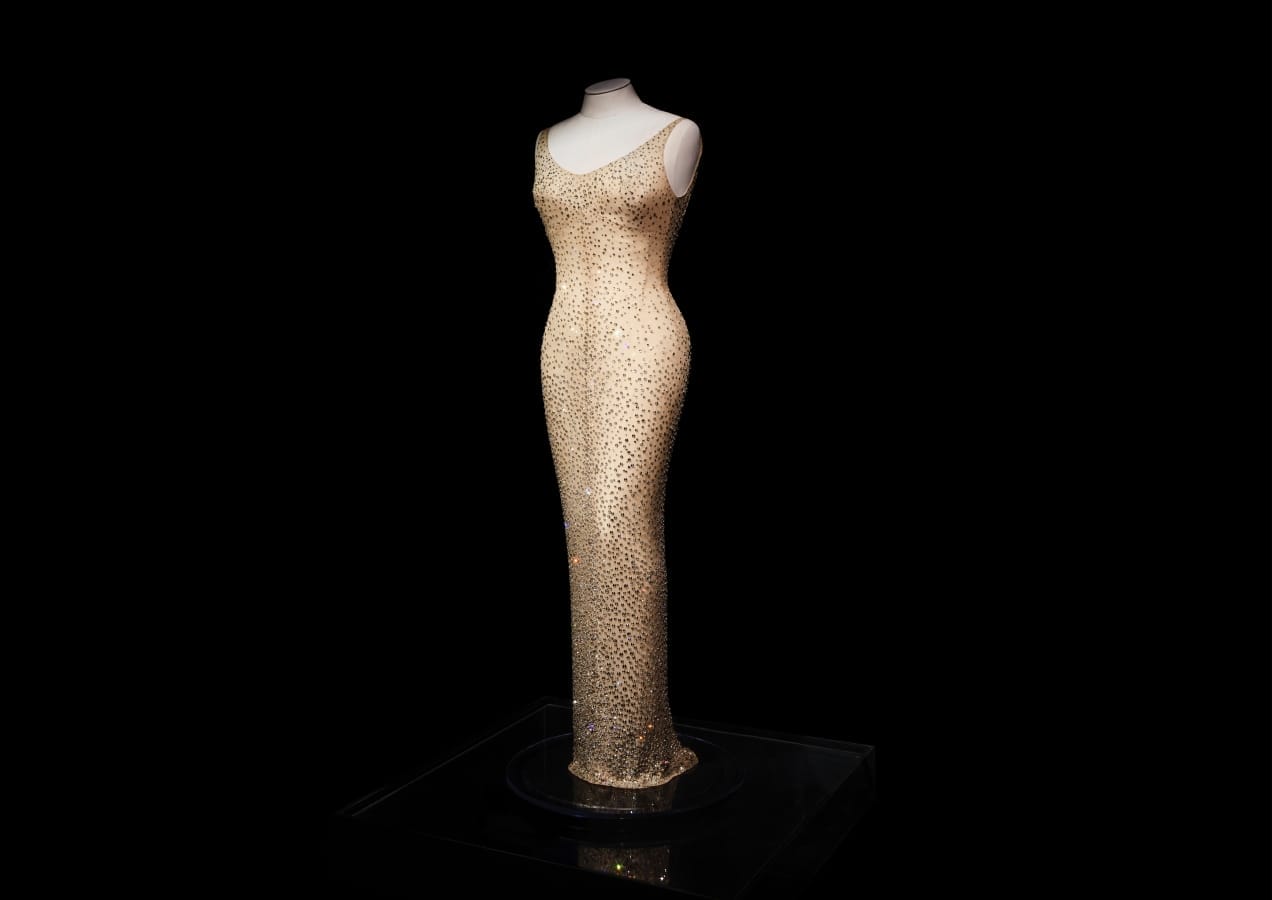
The Marilyn “Happy birthday, Mr. President” dress.
However, the biggest sparkle of the exhibition belongs to another masterpiece: Swarovski’s largest crystal chaton. Created in 2023, this 75-kilo marvel required 180 hours of cutting to achieve its 156 facets. It’s positioned to refract white light into its chromatic components, a spectacular demonstration of the optical science that underpins every Swarovski creation.
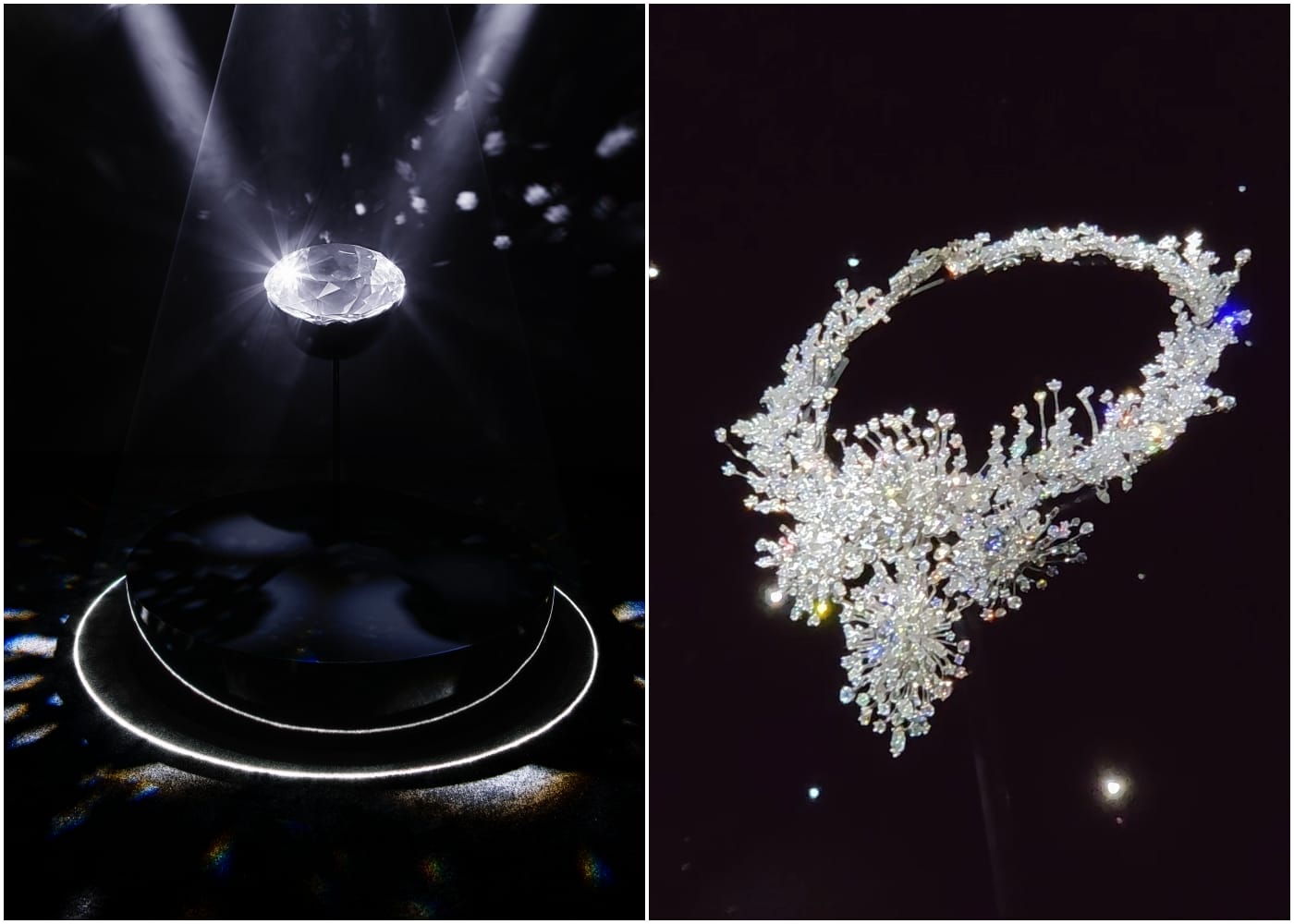
From left: The 75kg Swarovski crystal; a Swarovski necklace of lab-grown diamonds.
The Swarovski magic
To understand the full breadth and potential of Swarovski crystals, we then explore the Mathemagical chamber, where we encounter over 5,000 unique crystal formulas, 300,000 varieties of cut, colour and effect, and 135 different hues spanning the entire spectrum of human vision.

The Mathemagical section.
These statistics find their most dramatic expression in Giovanna Engelbert’s Met Gala creations. The 2024 pieces required extraordinary commitment—Anok Yai’s breathtaking catsuit features 98,000 crystals hand-applied by eight artisans over 130 hours, whilst its accompanying necklace comprises 1,050 lab-grown diamonds in seven different cuts with a total weight of 156.62 carats.

Giovanna Engelbert’s Met Gala creations, including the Anok Yai catsuit (far left).
Fashion hall of fame
The last gallery promises even more fashion extravaganza. Pop Icons delivers exactly what its name promises. Josephine Baker’s 1925 La Revue Nègre costume—a remarkably preserved example from her earliest Paris performances—shares pride of place with more contemporary legends. Think Bob Mackie’s 1975 design for Cher, Gianni Versace’s crystal mesh slip dress worn by Tina Turner, and Thierry Mugler’s 1992 Western-inspired ensemble recently worn by Beyoncé for her Cowboy Carter album visuals. Each one a true demonstration of crystal’s unique ability to amplify star power.

Beyoncé’s Cowboy Carter costume.
Perhaps most telling is the Jeremy Scott-designed chandelier costume Katy Perry wore to the 2019 Met Gala—a look so audacious it actually lit up on the red carpet. It exemplifies Swarovski’s particular genius: the house has never been precious about its product. These crystals were made to be seen, to perform, to transform their wearers into something luminous.

From left: Grace Jones’ bowler hat by Philip Treacy; Katy Perry’s chandelier dress by Jeremy Scott for Moschino; Cher’s Bob Mackie creation.
A legacy of fantasy & glamour
What ‘Masters of Light’ ultimately reveals is that Swarovski’s longevity stems from understanding a fundamental truth: in fashion and film, fantasy requires precision. Every spectacular moment—whether Monroe’s breathless performance or Grace Jones’ bedazzled bowler hat—relies on crystals cut with mathematical exactitude. The magic is real because the craftsmanship is meticulous.
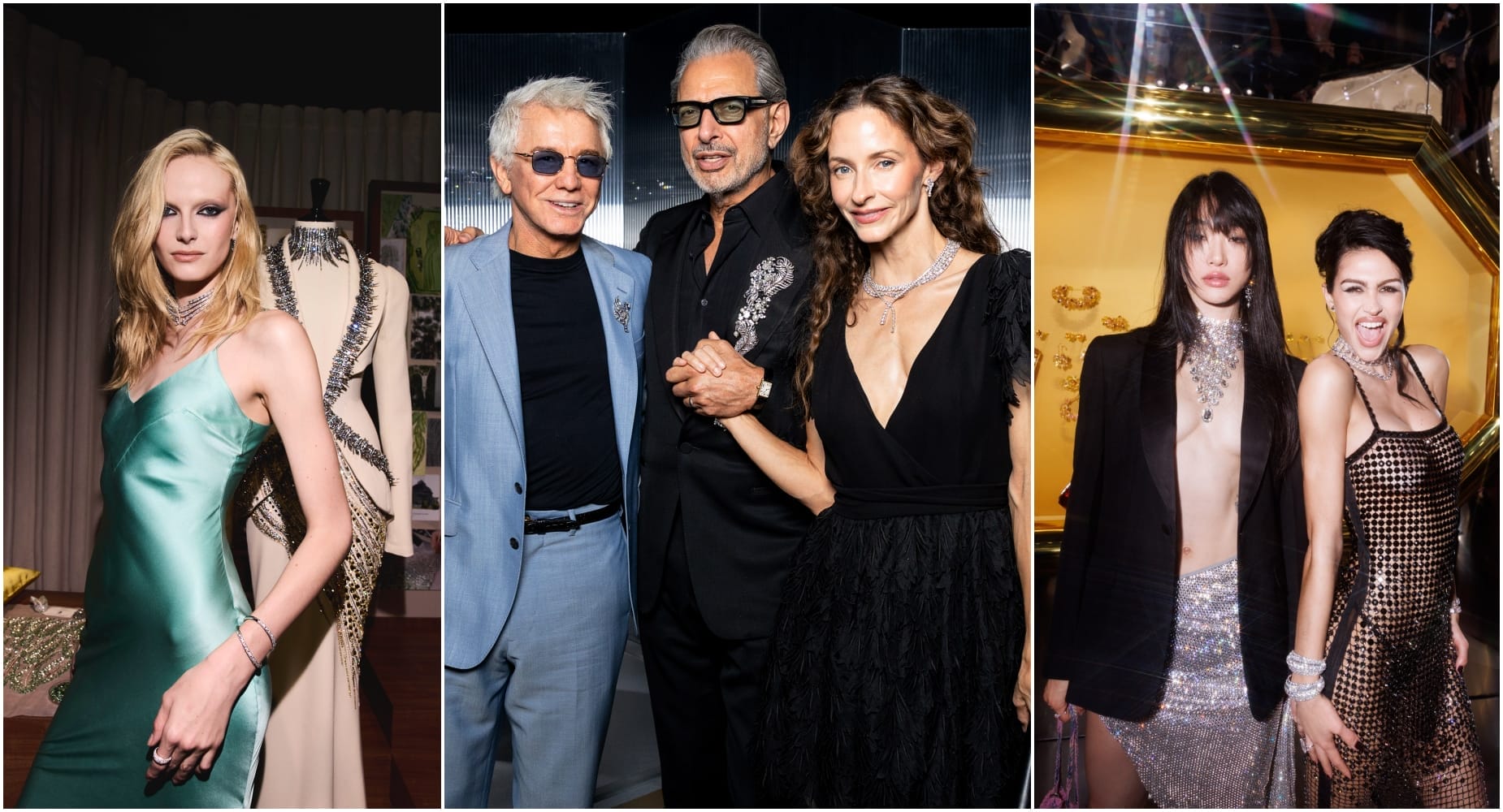
From left: Alex Consani; director Baz Luhrmann with Jeff Goldblum & Emilie Livingston; Amelia Gray & Sora Choi.
Standing in Hollywood, surrounded by 130 years of captured light, one thing becomes crystalline: Daniel Swarovski’s dream of a diamond for every woman wasn’t about democratising luxury. It was about proving that brilliance, properly executed, never goes out of style.

