

A First for American Fashion
When Thames & Hudson launched its celebrated Catwalk series, the volumes that followed read like a roll call of European fashion royalty: Chanel, Dior, Prada, Givenchy. So, the arrival of Ralph Lauren Catwalk as the eleventh volume marks a genuine milestone. It is, notably, the first American fashion house to be included in the series. That alone makes it worth paying attention to.
‘Ralph Lauren Catwalk: The Complete Collections’ is a rare deep-dive into one of fashion’s most enduring legacies. Here’s why it belongs on your coffee table.
Authored by veteran fashion journalist Bridget Foley, the book is a thorough visual chronicle. Covering five decades, the book spans from Ralph Lauren’s debut womenswear collection in autumn 1972 right through to his Autumn ’25 women’s collection. In addition, it features over 1,300 original runway photographs, making it as comprehensive as it is beautiful.
Furthermore, Foley’s writing brings genuine depth to the imagery. Rather than simply cataloguing looks, the book examines how Lauren blended seemingly opposing ideas: masculine and feminine, rugged and refined.
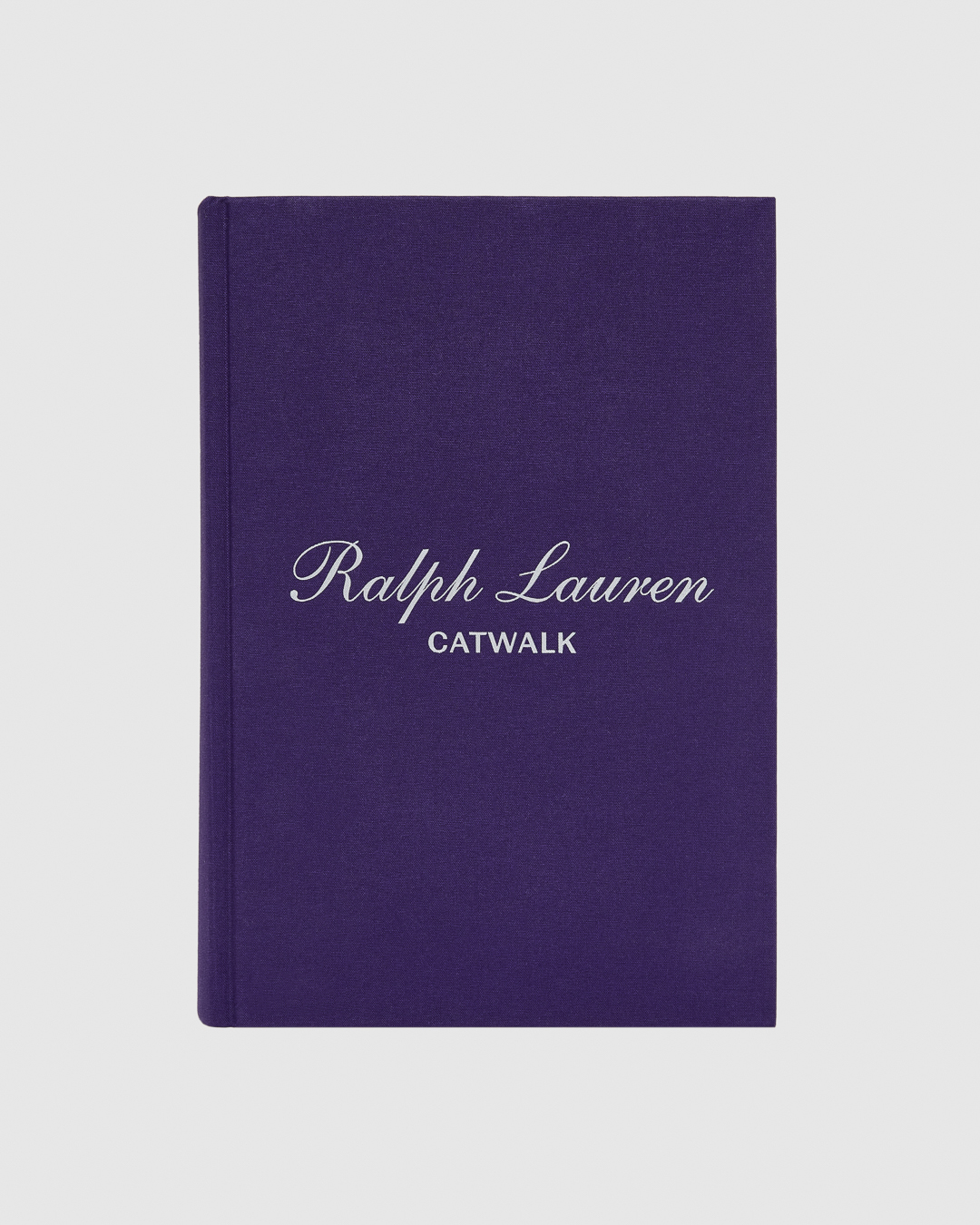
Ralph Lauren Catwalk (Thames & Hudson)
More Than a Fashion Book
Lauren himself once said, “It was never about a shirt. It was about a way of living.” That philosophy runs through every page. As a result, Ralph Lauren Catwalk reads less like a fashion archive and more like a portrait of a cultural vision that has shaped American style globally.
The Catwalk series has sold over 2.5 million copies worldwide. Needless to say, this collector’s edition is certain to find its audience quickly. BAZAAR talks exclusively to its author Bridget Foley to learn more about this exceptional compendium.
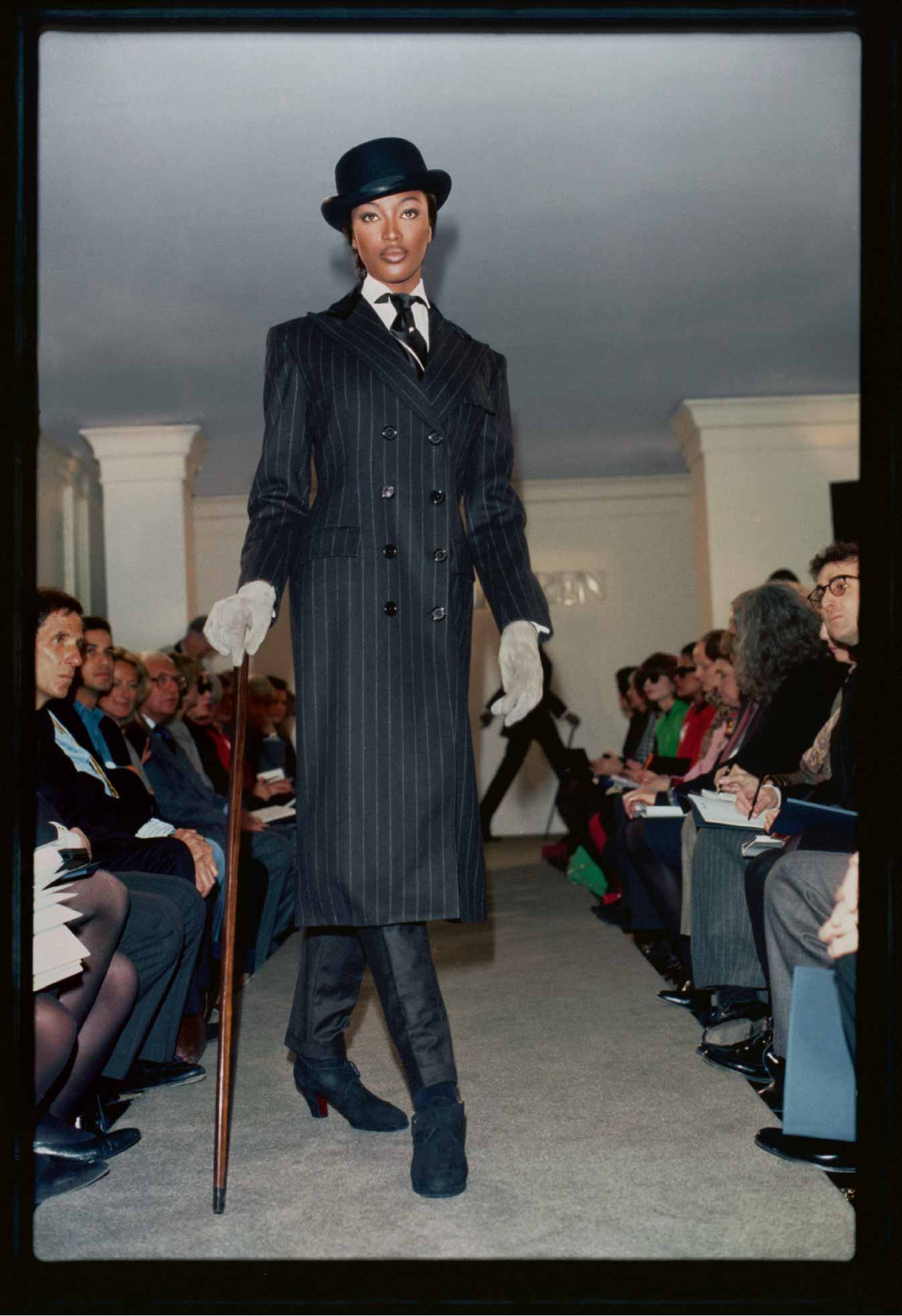
Naomi Campbell, Fall 1992. Photography credit: Robert Kirk.
A Significant Milestone
Ralph Lauren Catwalk is the first American fashion house to be featured in Thames & Hudson’s prestigious Catwalk series. What does that milestone mean to you, and why do you think Ralph Lauren’s inclusion feels so significant right now?
Bridget Foley: For Thames & Hudson to feature Ralph Lauren in its beautiful and important Catwalk series is extremely significant on multiple levels. First, the series is a remarkable resource for anyone seriously interested in fashion—people in the business, students, and others with a genuine, deep interest. And you cannot be truly knowledgeable about fashion without understanding Ralph Lauren—his aesthetic, his lifestyle ethos, his cinematic approach to his work.
Catwalk’s approach is unique in its scope. It is, in a word, comprehensive, with a distillation of each house’s full runway output. If you want to see what Ralph Lauren did for Spring 1985, there it is. In that sense, there’s a clinical aspect. Yet that information isn’t only clinical; it’s also contextual.
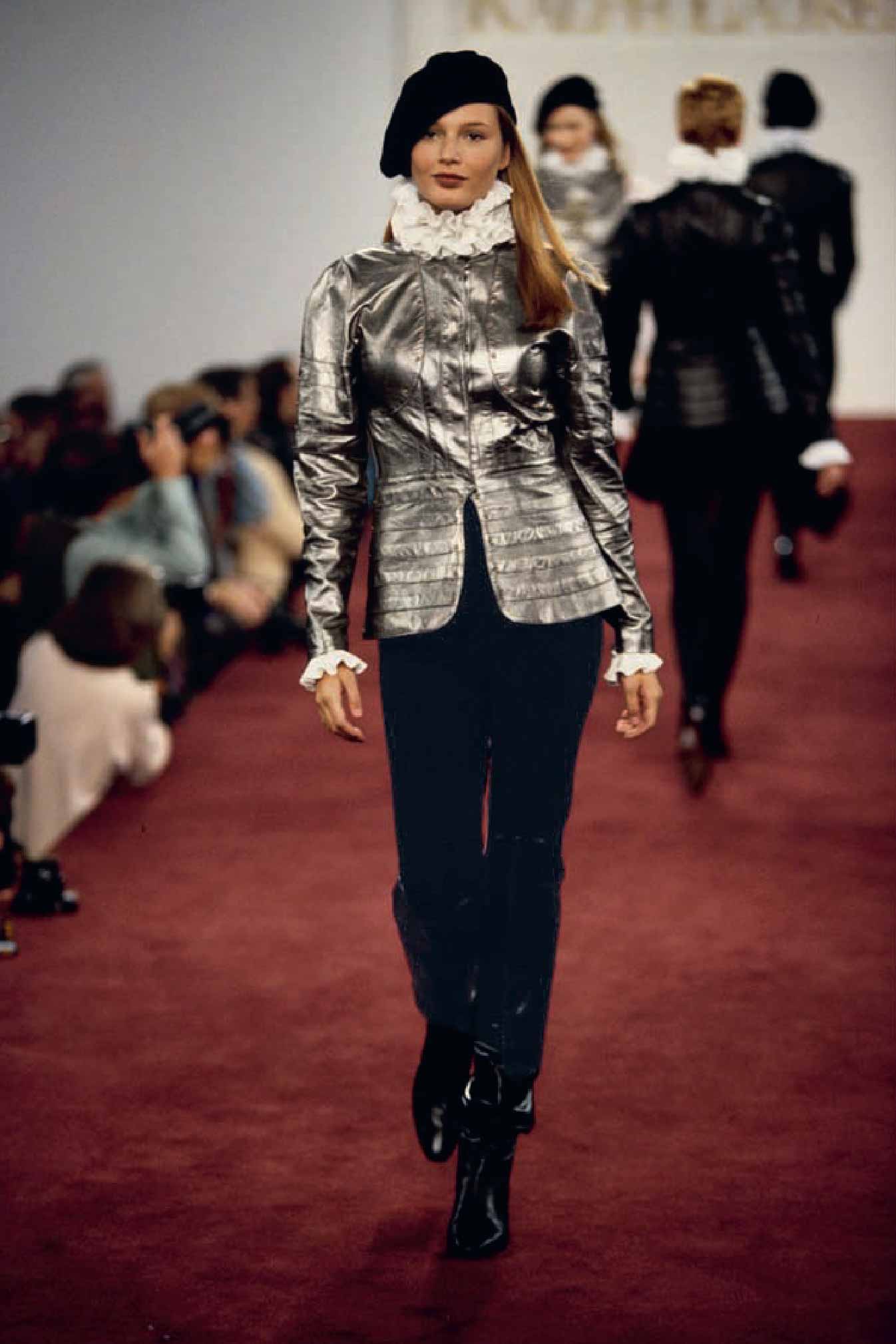
Fall 1994. Photography credit: © Dan Lecca.
Every collection a designer presents is somehow representative of its time. With Ralph Lauren Catwalk, the shows covered span from 1972 to 2025—55 years of head-spinning cultural change—change in which Ralph played an active role, and that I tried to capture to some small degree. In that sense, the Catwalk series offers a mini snapshot of cultural history.
Recognising American Fashion
But you asked about Ralph being the first American fashion house featured. The recognition of American fashion as epitomised by Ralph Lauren is important, especially since, let’s face it, American fashion right now is somewhat challenged. There’s a lot of wonderful work going on here in the U.S., but particularly at the luxury level, much of the industry feels in flux. It’s exciting that T&H is shining a light on American fashion with Ralph Lauren Catwalk.
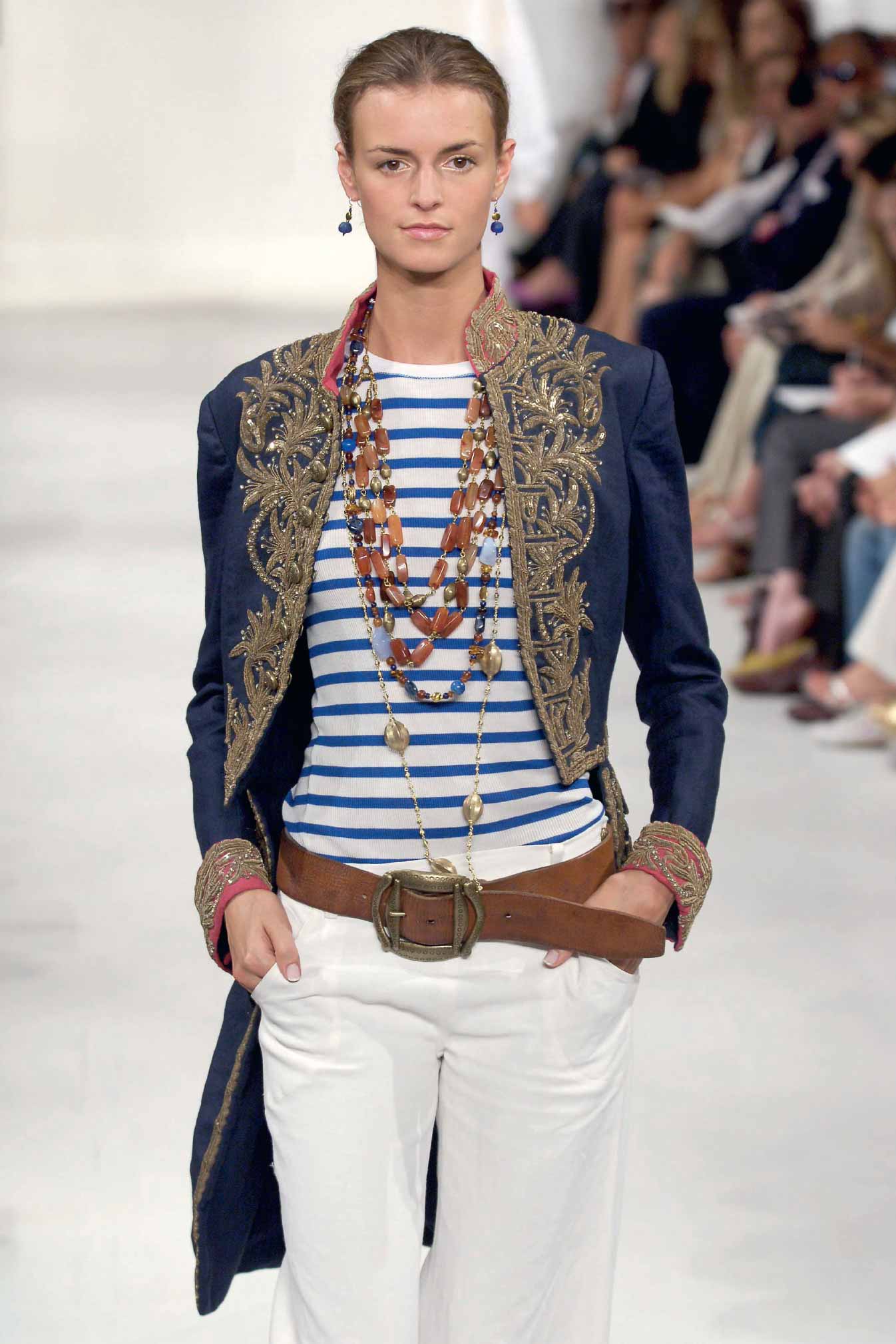
Spring 2006. Photography credit: © firstVIEW.
That said, while it’s notable—and great for the American industry—that Ralph Lauren is now included in the series, as I see it, his inclusion has less to do with him being an American than with the fact that, given the strength of his vision and longevity, and his resulting success and global reach, he belongs in the proverbial conversation with Dior, Chanel, Saint Laurent, Prada, etc. It’s not because T&H felt a political need to have an American in the mix, but because that is the sphere in which Ralph Lauren belongs.
Ralph’s Forever Muse
The book traces Ralph Lauren’s debut womenswear line in 1972, inspired by his wife Ricky. In your opinion, how has the role of that personal muse and that original inspiration evolved across the decades of collections?
BF: One of the joys of doing this book was delving into the full range of Ralph’s inspirations, and tracking their manifestations through the years. When we think of Ralph Lauren, we tend to think of them as being romanticised locales and historical references—the English countryside, the American West—and those themes are essential to Ralph’s work.
But his real, overarching inspiration is and has always been his own life. It started with what he wanted to wear as a young man but found missing in the market. Then, very quickly, because he met and married Ricky early in his career, it became about how to address Ricky’s wardrobe desires. There’s a wonderful quote from Ralph—I’m paraphrasing, but the gist is that he said, “I was never attracted to the woman in high heels and a cocktail dress, I was attracted to the girl”—he said “girl”—“in a white shirt and jeans with the hair blowing in the wind. That’s the girl I married.”
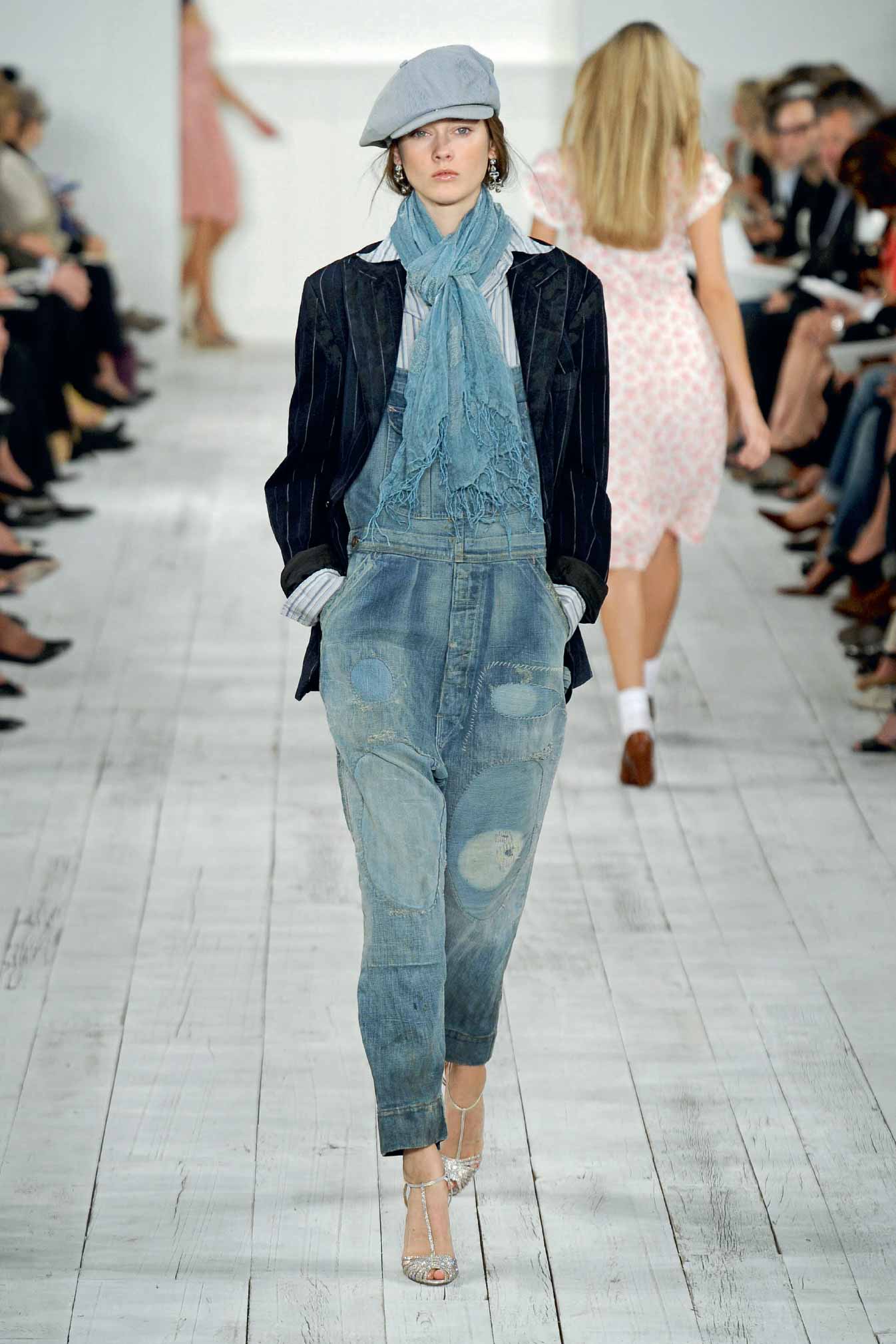
Spring 2010. Photography credit: © firstVIEW.
The Ralph Lauren “Girl”
That image of Ricky—tailored, casual, fresh—recurs over and over on Ralph’s runways. That doesn’t mean delicate models with long blonde hair. Rather, it means that he has always wanted his models to appear on the runway in their most beautiful, enhanced natural states. He’s never done “beauty statements.” He hates that. That’s one reason for his enduring appeal: Show pictures from 30 years ago still look fresh.
And Ralph has expanded on that “personal inspiration.” Ricky is his forever muse. Period. As an extension of that, their life together, their family became a major, ongoing influence. First it was about what Ralph needed in his wardrobe, then what Ricky needed, and then great clothes for the kids. And then, their homes. Ralph launched Home because he and Ricky felt available options wanting. It was always about what he thought was missing, from his and Ricky’s perspective. And that remains true today. He wanted to provide that.

Fall 2004. Photography credit: © firstVIEW.
Longevity & Range
As the author, what new or surprising insights did you uncover about Ralph Lauren’s design journey that you hadn’t expected going in?
BF: New, surprising insights—a fun topic! Big picture: For a designer to achieve longevity, he must stay true to himself and retain a consistency of vision while still advancing the aesthetic personally and in response to the times. It’s the most difficult thing for a designer to do over the long haul, and the most essential. Ralph has done so masterfully. I knew a lot going into this project, so I knew about his consistency of philosophy and vision, but getting into the nitty-gritty of how he worked that balance between consistency and forward motion was fascinating for me.
Smaller picture: Ralph is probably luxury’s only true lifestyle designer, yet we tend to think of him focusing on every aspect of daywear, especially for women, with only a very specific interest in evening wear—the tuxedo, which he’s often cited as his favourite look. Given that, and apparently, my own misconceptions, I was surprised at the range of his eveningwear, and how early it started. For Fall 1981 he sent out an array of ’30s Hollywood-inspired gowns that was just extraordinary, and he had been doing remarkable evening options ever since (my favourites) those siren looks to denim reimagined in corsetry.
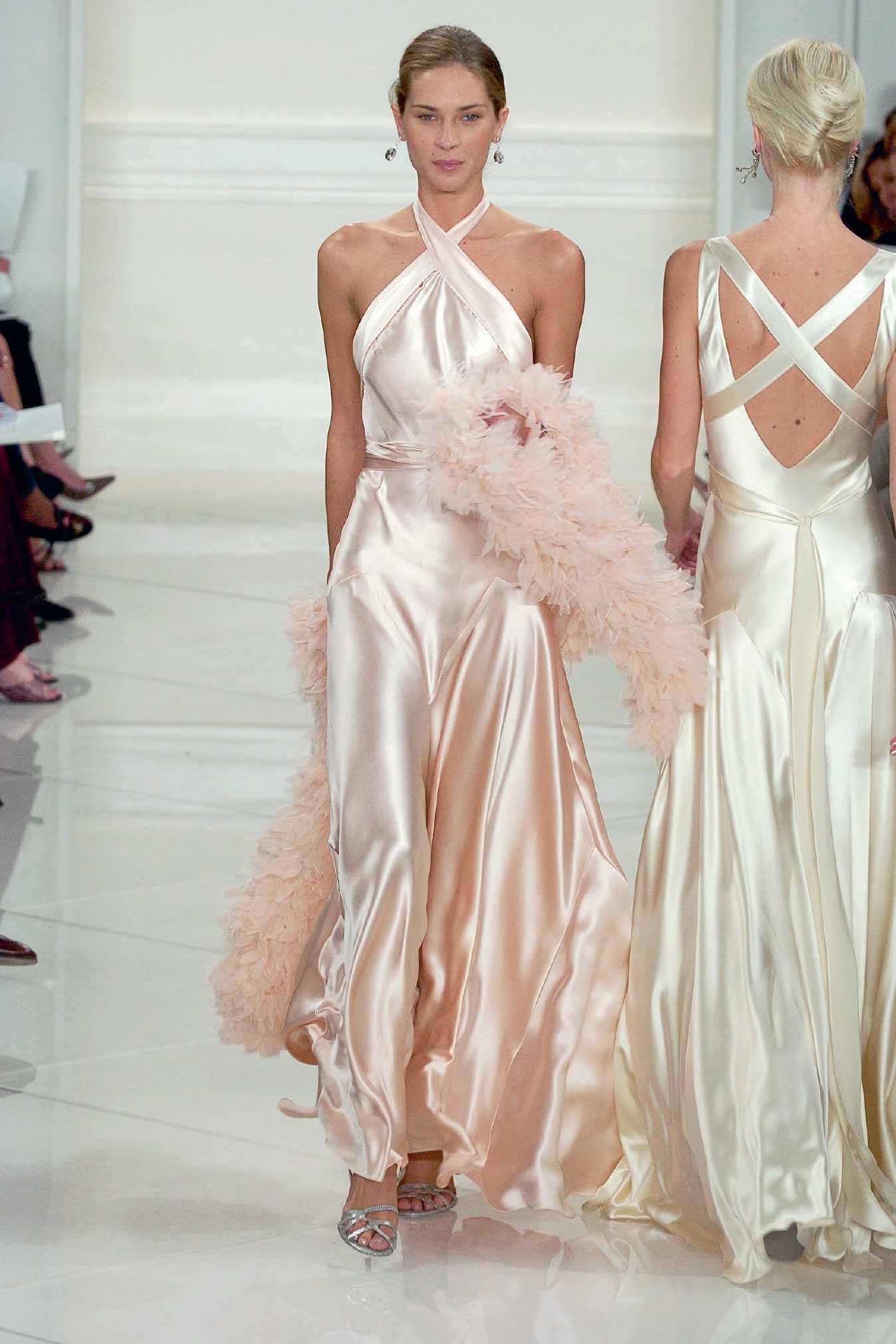
Spring 2005, Photography credit: © firstVIEW
Historical Archive
The Catwalk series editorial director described a mission to preserve the earliest shows before they became “forgotten” in the digital age. Were there collections in Ralph Lauren’s archive that felt particularly at risk of being overlooked?
BF: I assume you mean Adélia Sabatini, the brilliant young editor who came up with the Catwalk series. Yes, there are collections at risk of being overlooked. For some of the first shows, there are only three or four existing photographs. But it’s not just those early ’70s shows. Anything before the video age is at risk of being forgotten.
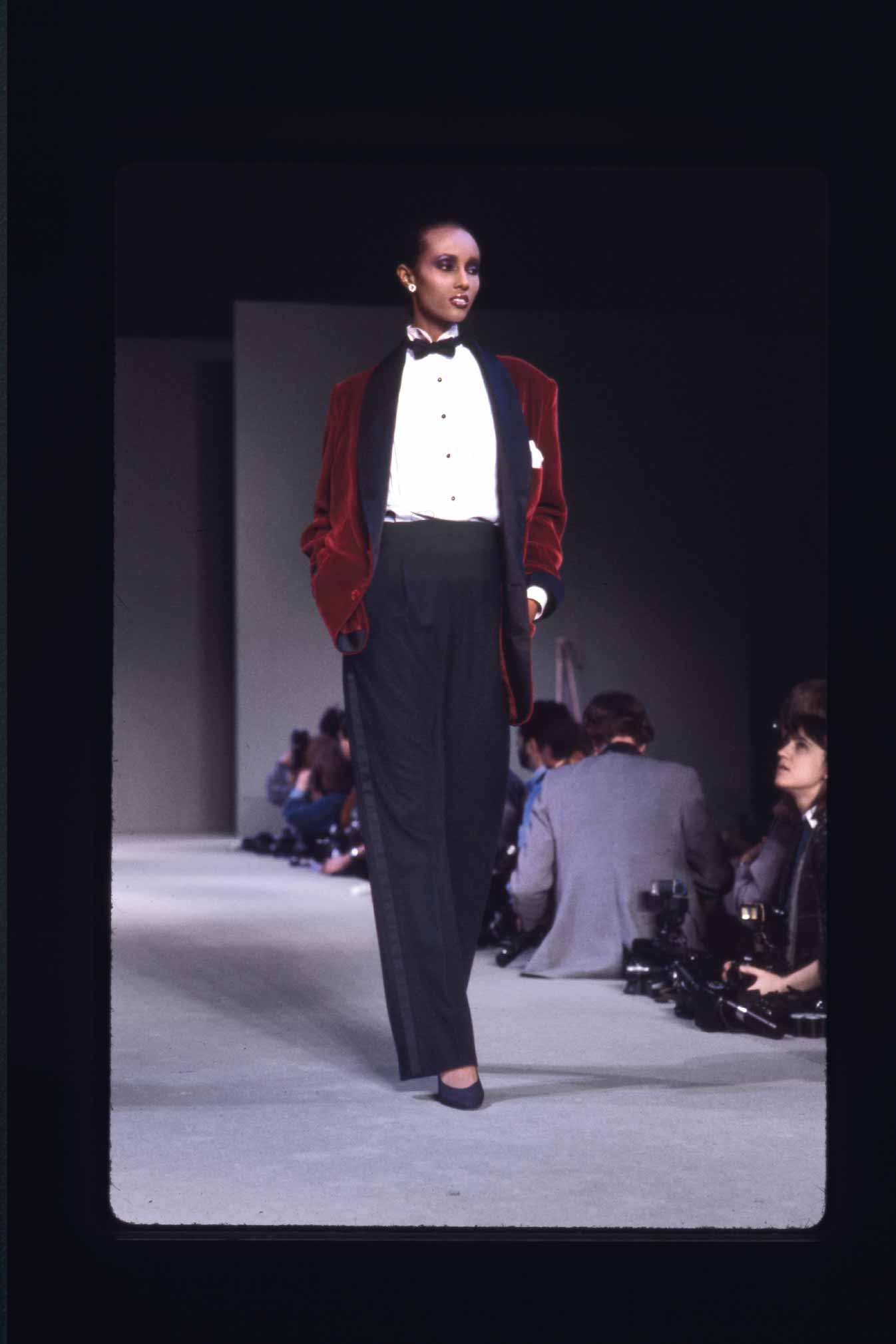
Fall 1983. Photography credit: Michel Arnaud
Even in the early days of videotaping, the shows got very little consumer coverage, and the video was primarily for in-house use. It wasn’t until the mid-to-late ‘90s, and the dawn of the internet age, that public fascination with fashion shows started. Before that, they were truly “insider,” and as such, the historical memory of them was confined to a small number of people, one that sadly has diminished over decades.
For example, when Ralph introduced the Western motif to his women’s wear for Fall 1974. It was one of several moods in that show. WWD covered the show and gave a mostly positive review, but slammed the Western part, calling it, “at best, bizarre.” Sadly, no photos of that theme exist, although hindsight indicates that WWD was hasty in its dismissal.
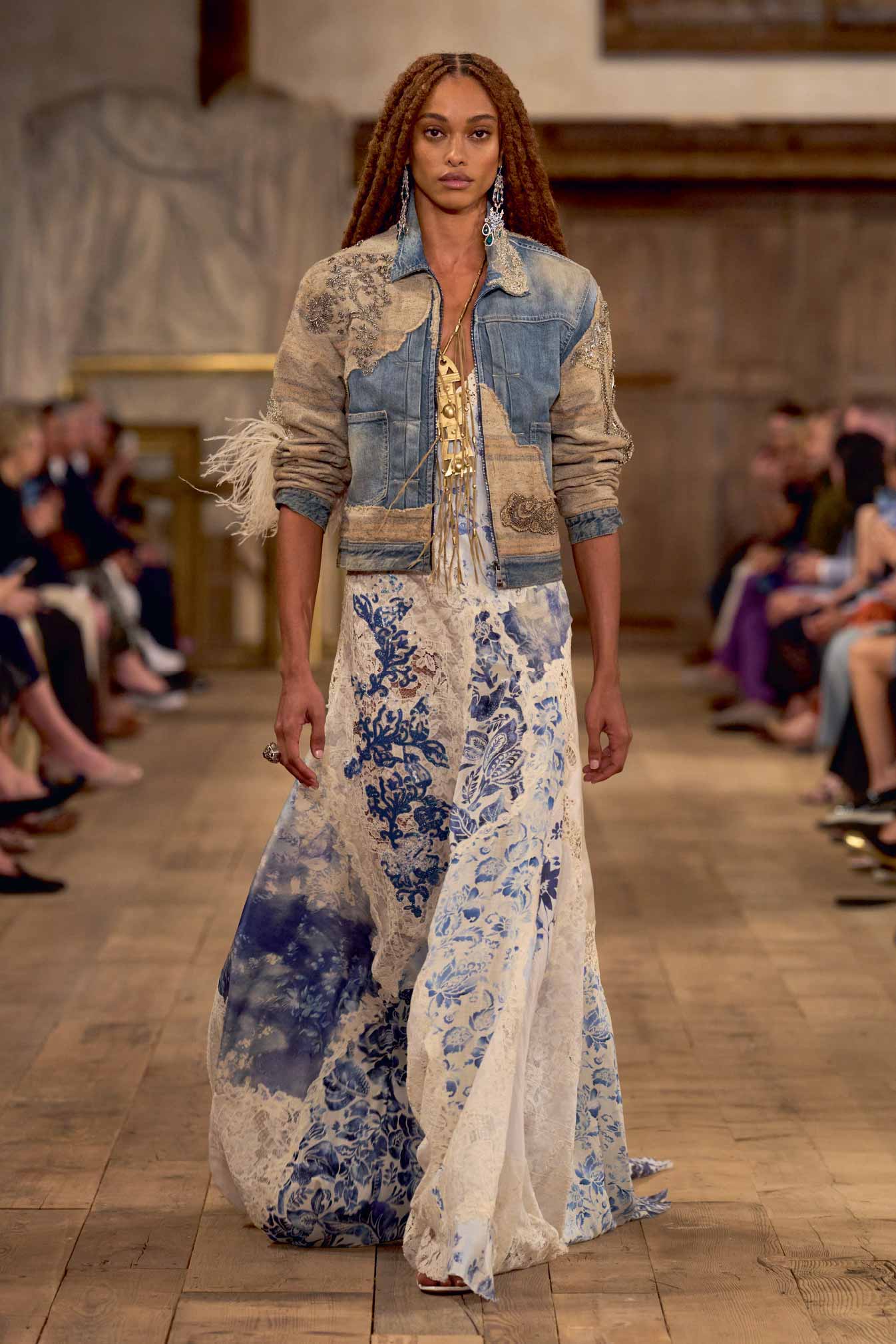
Spring 2024. Photography credit: Isidore Montag/Courtesy of Ralph Lauren.
Designing a Lifestyle
Ralph Lauren is credited as the first designer to produce a complete lifestyle vision. How does the runway—traditionally a purely fashion space—communicate that broader lifestyle world?
BF: Ralph as the creator of the modern lifestyle concept—indeed! That lifestyle concept didn’t grow out of a grand-scale business plan. Again, it grew out of Ralph identifying the kinds of clothes and other products that he and his family needed for their lives, and surmising that if the Laurens needed these products, other people, other families did as well.
Always, the aspirational message was and remains central—the notion of lives lived well from the inside out. But inherent in the aspiration: a focus on function. Ralph is only interested in the kinds of clothes, accessories, and homewares, etc., that people need for their real lives, for the entirety of their real lives.
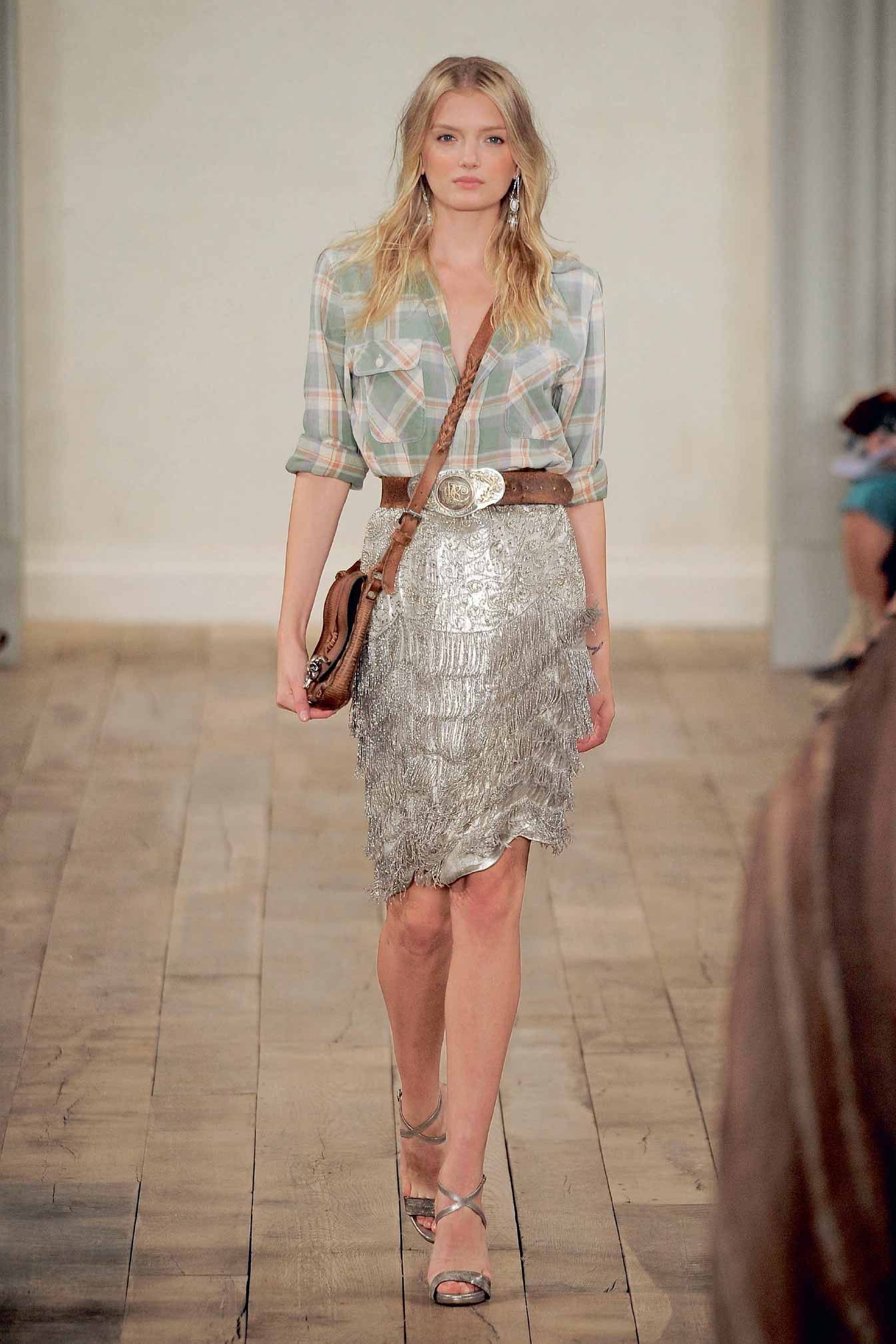
Spring 2011. Photography credit: © firstVIEW
That entirety isn’t only about dressed-up daywear and evening. It’s about clothes for casual times, and active times—performance-sport situations. Ralph introduced those categories decades ago—and considered them legitimately worthy of the runway. That separates him from the rest of the luxury fashion sphere. It’s interesting to me that, what? 15, maybe 20 years ago, the rest of luxury “discovered” streetwear, it “discovered” sneakers, and started showing these categories on the runway to great fanfare in the press. Ralph has always put clothes for sport, and shoes for walking on his runway, alongside the chic suits and the gowns and the stilettos. Because in the real world, people need it all.
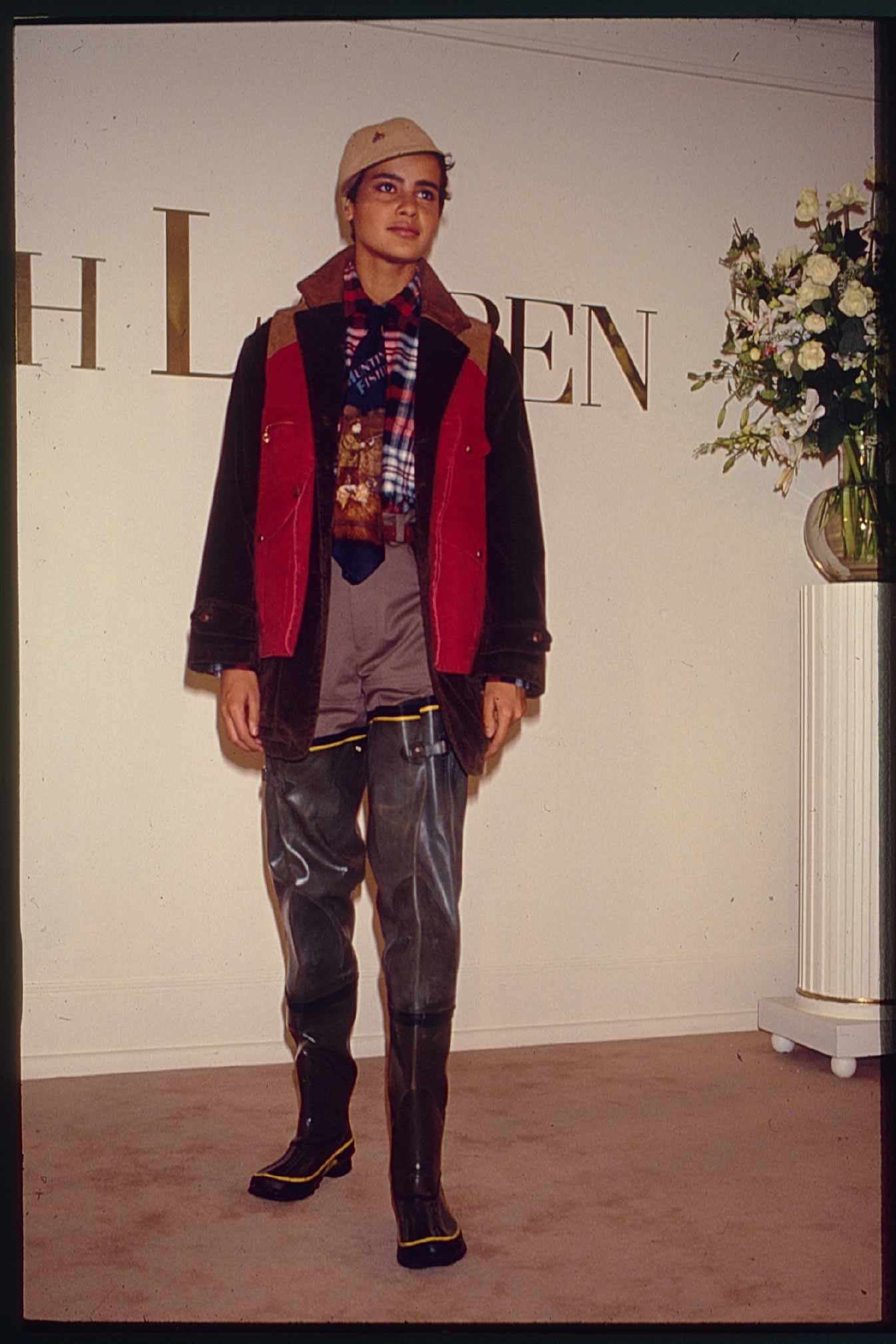
Fall 1990. Photography credit: © Anthea Simms.
Pragmatic Fashion
The Catwalk series has sold over 2.5 million copies globally, sitting alongside volumes on Chanel, Dior, Prada, and Versace. How does Ralph Lauren’s distinctly American identity stand apart in that European-dominated company?
BF: Yes, in one respect, Ralph Lauren’s American perspective sets his Catwalk apart from the Europeans in the series. I think the defining element of that distinction is Lauren’s inherent pragmatism.
This manifests in his lifestyle concept—clothes for all aspects of life, all of which have gotten some runway play over the course of his career, a notion which, to my knowledge, is not present in any of the featured European work. There, even when a designer references sport or streetwear, the references are made from a fashion perspective rather than from the real-life perspective of utility, whereas in Ralph’s case, there are clothes inspired by sport and clothes for sport, both of which he deemed runway-worthy from the start. So that is a significant point of difference.
But again, I believe that Ralph Lauren was chosen for inclusion in the Catwalk series not because he is an American, but because his designs and his brand resonate globally, all as powerfully as the series’ European subjects.
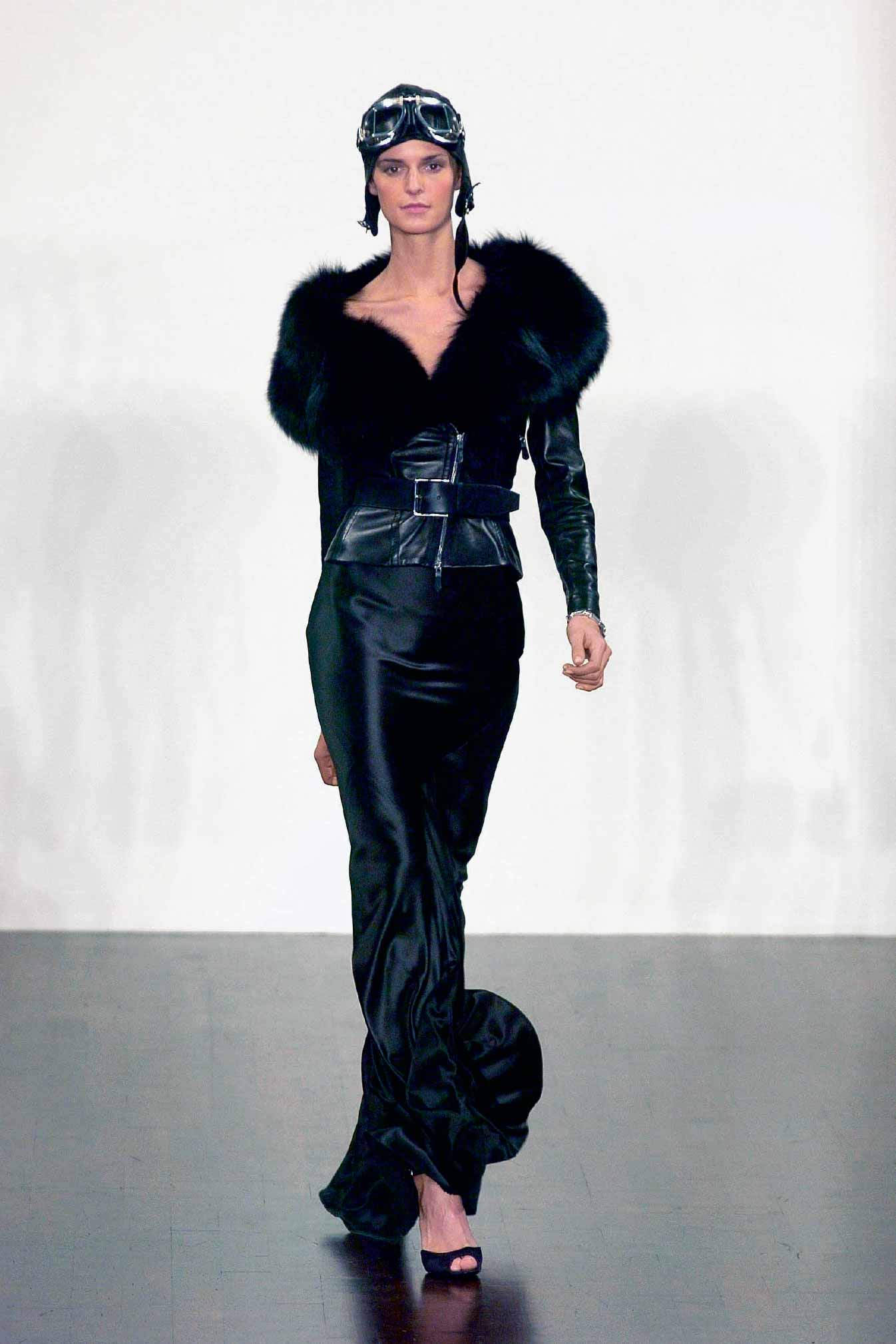
Fall 2005. Photography credit: © firstVIEW.
The Ralph Lauren Allure
For a reader picking up this book in 2026, what do you hope they take away about Ralph Lauren’s lasting legacy — and what does his work say about the future of American fashion?
BF: I see a pair of takeaways. First is that this is the work of a brilliant creative and a keen cultural observer. The overarching message is that Ralph Lauren has, across almost 60 years, created a consistently exquisite, compelling world. It has evolved with the times, and if it has hit some bumps along the way, it has remained resolutely optimistic and hopeful.
Part of its allure is that Lauren focuses on giving people the varied sartorial elements, so beautifully captured in Catwalk, to help them express their own personal style, and fulfill at least some of their aspirations through getting dressed. That’s what I hope every reader picking up this book will come away with.
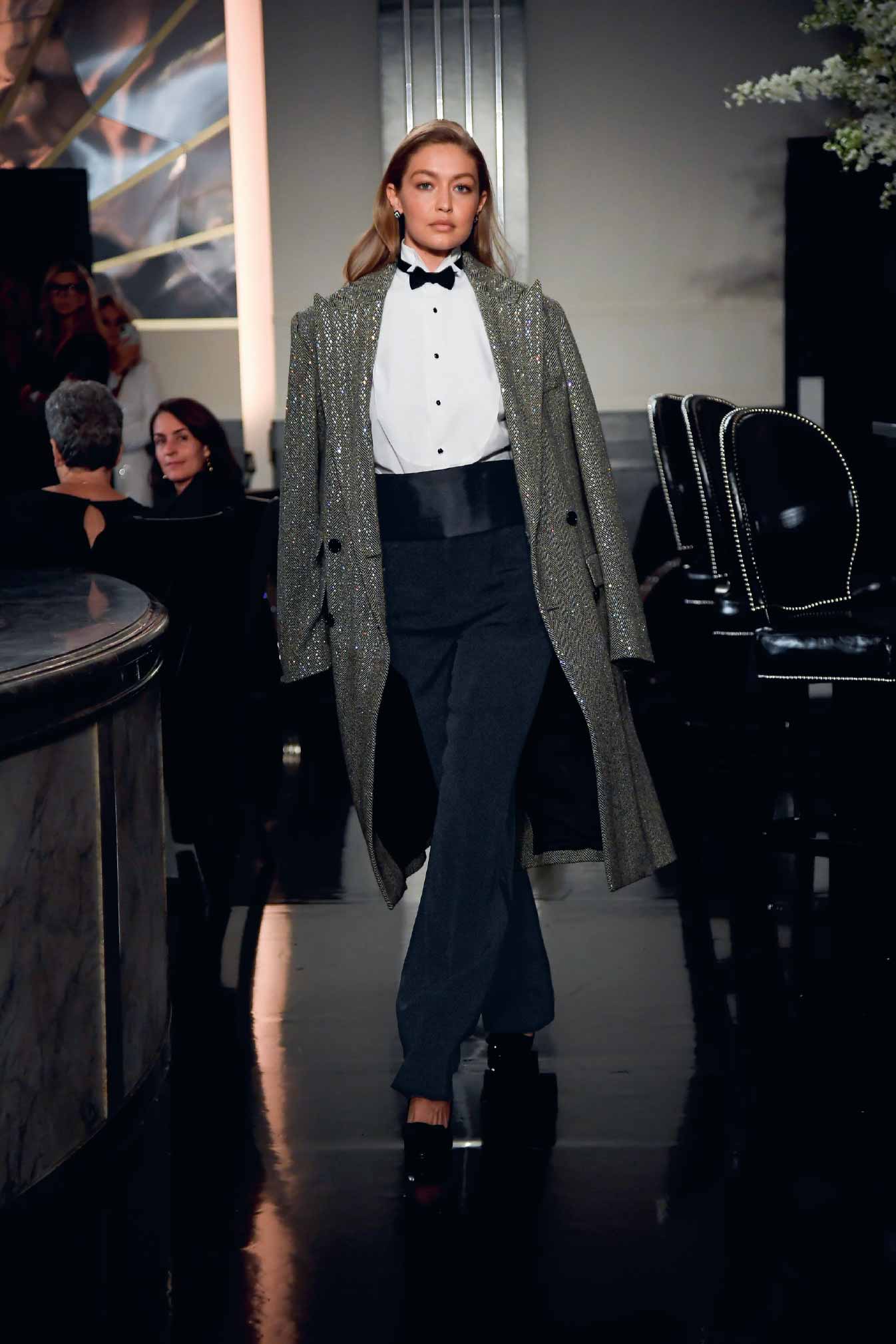
Gigi Hadid, Fall 2019. Photography credit: © firstVIEW.
There’s also an important takeaway for creatives, in fashion and beyond. That message: Be yourself. Stay true to who you are. Experience the world around you; live in it and advance with it, but don’t let it smother your identity.
The Future of American Fashion
As for what Ralph Lauren’s says about the future of American fashion more broadly, I don’t know. Ralph’s level of success and global impact are singular in American fashion, and extremely rare on the world stage, both in terms of global impact and longevity. Very few major designers, current and historical, have stayed at the creative helm and remained vibrant and relevant into their fifth or sixth decades. With Giorgio Armani’s passing, now, it’s a very short list—Ralph, Rei Kawakubo, Yohji Yamamoto and, at a different market level, Anna Sui. I think going forward, that degree of longevity will be increasingly difficult to achieve anywhere, but particularly so in the U.S., where the financial support system for fashion is wanting. So I don’t know.
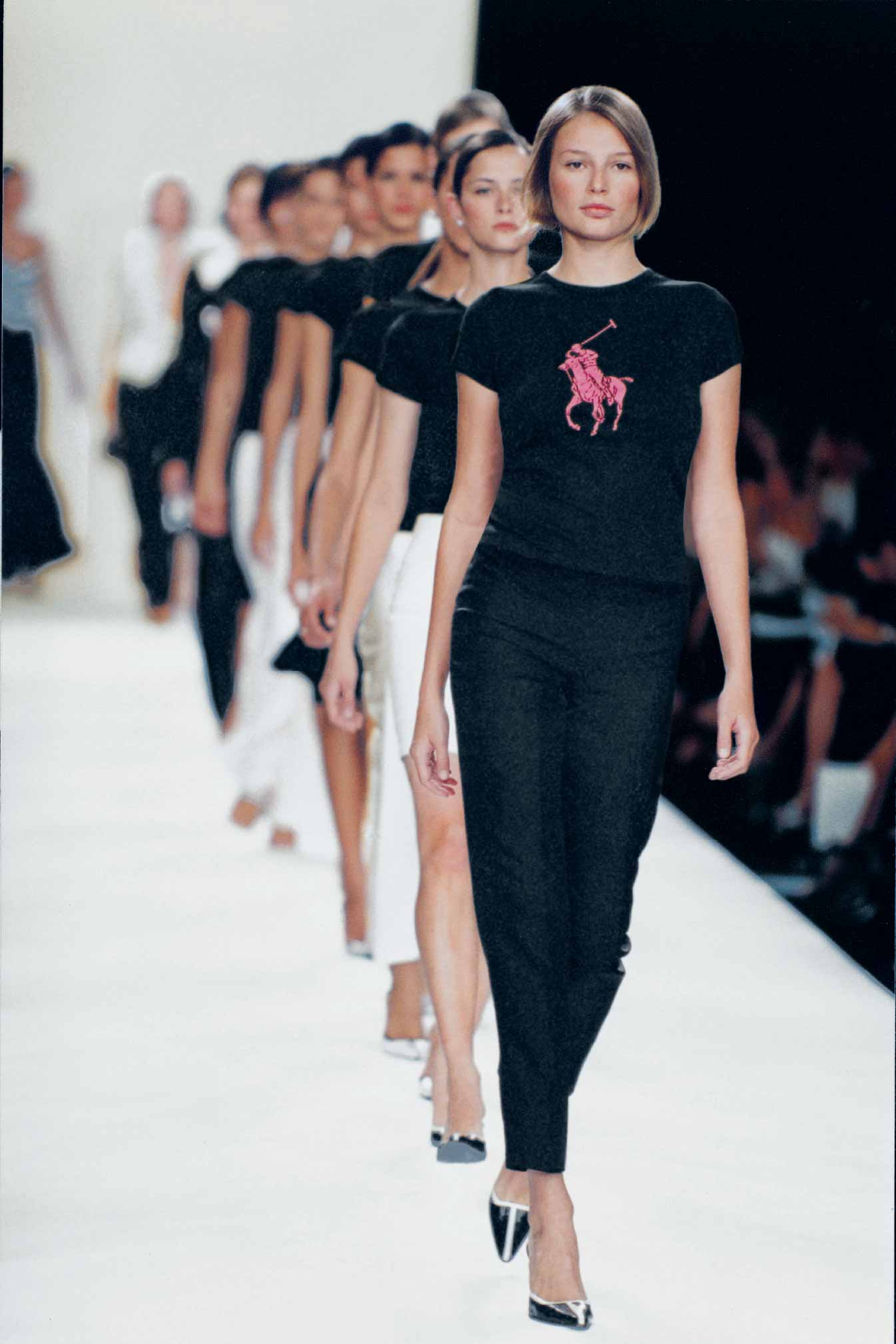
Spring 2001. Photography credit: © Dan Lecca.